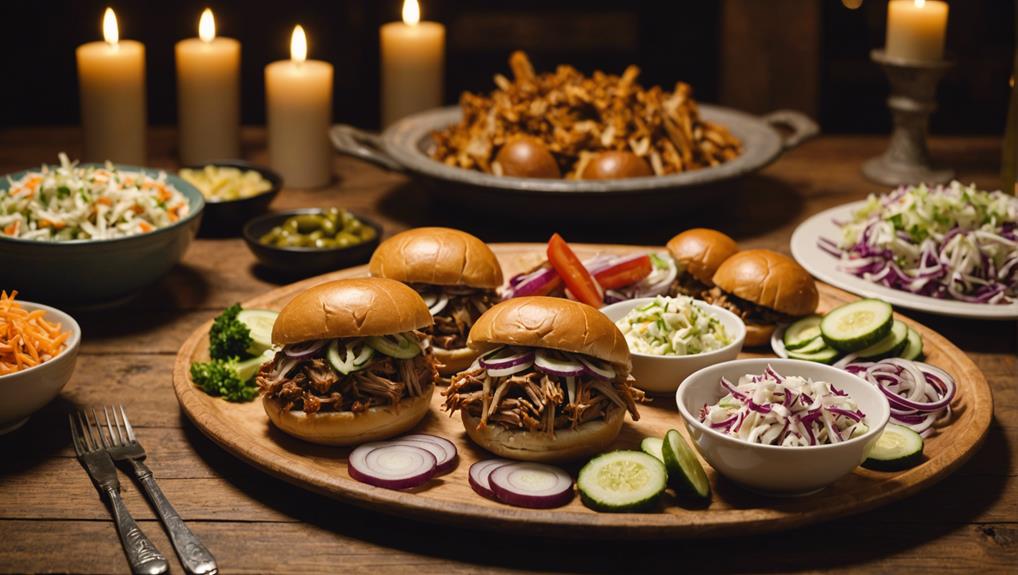
When planning a meal with pulled pork, you’ll want the right portion sizes to satisfy everyone. Typically, you should aim for about a third to half a pound of cooked meat per person, but the type of event and your guests’ appetites can influence this.
A quarter-pound per person is usually enough for sandwiches. But have you ever considered how the cooking process affects the weight or the difference between using boneless versus bone-in pork shoulder?
Understanding these details can make or break your gathering. Let’s explore how to make sure you have plenty of delicious pulled pork without overestimating or running short.
Table of Contents
Key Takeaways
- Plan for a third to half a pound of cooked pulled pork per person.
- Aim for a quarter-pound of cooked meat per person for pulled pork sandwiches.
- Uncooked pork shoulder loses about 50% of its weight during cooking.
- Use a 50% yield estimate for bone-in pork shoulder when calculating portions.
- Adjust portion sizes based on the event type and guests’ appetites.
Serving Size Guidelines
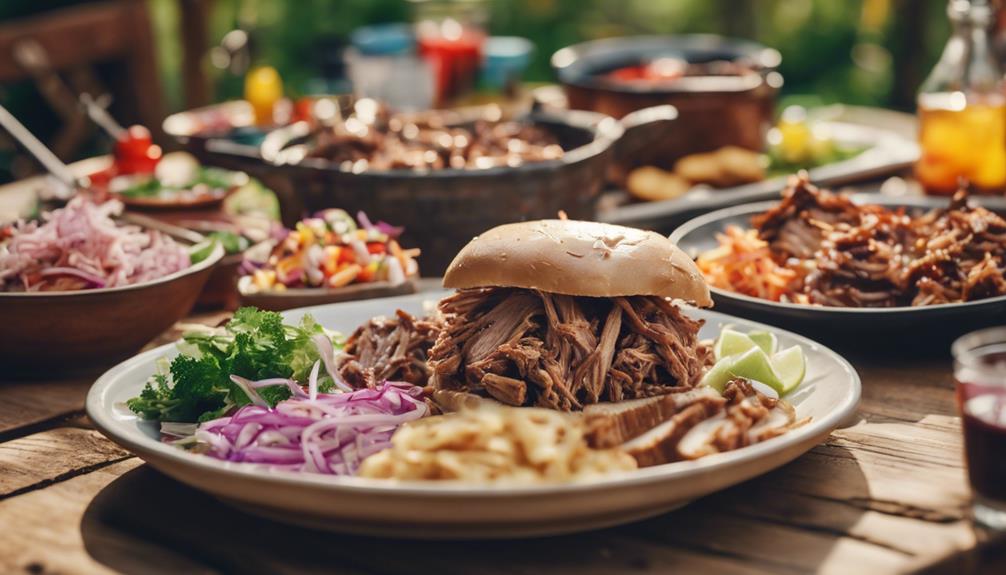
When planning your meal, you’ll typically need a third to half a pound of cooked pulled pork per person. This amount guarantees everyone gets a satisfying portion, especially if pulled pork is the main dish.
However, if you’re serving pulled pork sandwiches, you can reduce the serving size to about a quarter-pound, or roughly 4-8 ounces, per person. The amount per person can vary based on the event type. For instance, a casual lunch might require smaller portions compared to a hearty dinner.
Likewise, if you’re hosting a buffet-style event, people might take smaller amounts since they’ll be sampling various dishes. It’s also wise to refer to a meat serving size guide for more precise recommendations.
Remember to adjust portion sizes based on your guests’ age, gender, and appetites. Younger children and older adults mightn’t eat as much, whereas teenagers and those with larger appetites might need more.
Uncooked Vs. Cooked Weights
Understanding the weight difference between uncooked and cooked pork is essential for accurate meal planning. When planning for pulled pork, you’ll need to take into account that uncooked pork shoulder typically loses about 50% of its weight during cooking.
This significant reduction means you must calculate the uncooked weight needed to make sure you have enough cooked pork to serve your guests. To help you with this, here’s a handy table that compares the uncooked and cooked weights of pork shoulder:
| Uncooked Weight (lbs) | Cooked Weight (lbs) |
|---|---|
| 4 | 2 |
| 6 | 3 |
| 8 | 4 |
| 10 | 5 |
| 12 | 6 |
When determining how much pork to buy, bear in mind that the weight you start with will halve by the time it’s cooked. For instance, if you need 5 pounds of pulled pork, you should start with 10 pounds of uncooked pork shoulder.
This way, you’ll make sure you have enough cooked pork per person and avoid running short. Factoring in this weight loss during cooking is essential for meeting your serving size requirements.
By understanding these differences, you can confidently plan and purchase the right amount of pork for your event.
Boneless Vs. Bone-In
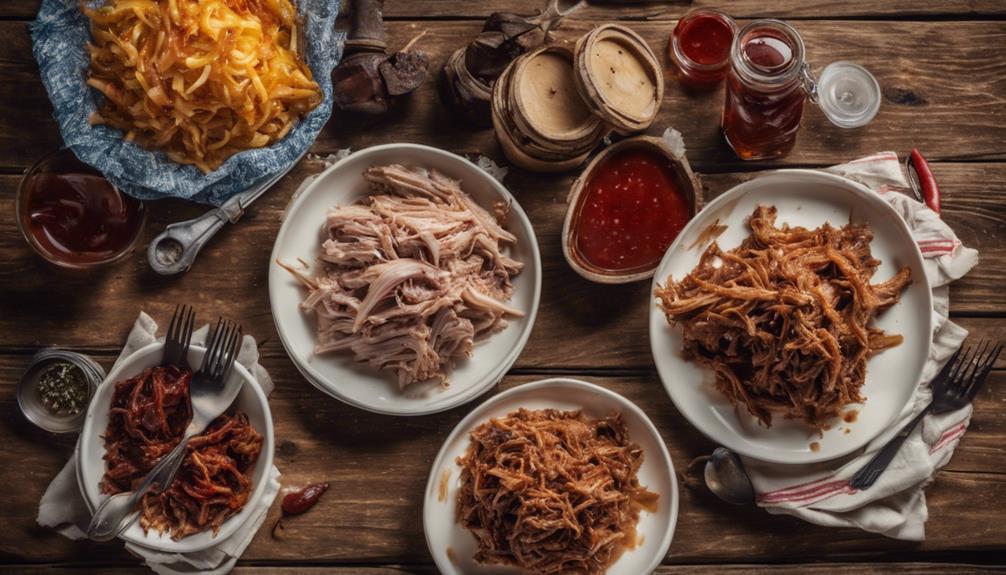
Choosing between boneless and bone-in pork shoulder greatly impacts your pulled pork servings. If you go for a bone-in cut, remember that it weighs more due to the bone and extra fat.
This means you’ll need to adjust your calculations differently than you’d for boneless pork shoulder. The type of cut you choose has a substantial effect on your portion planning.
A good rule of thumb for bone-in pork shoulder is to use a percentage yield of about 50%. This estimate accounts for the fat and bone weight, meaning that if you start with 10 pounds of bone-in pork shoulder, you’ll end up with around 5 pounds of pulled pork servings.
On the other hand, boneless pork shoulder generally has a higher yield because there’s no bone, and it often has less fat to trim away. This makes your portion planning easier and more predictable.
Understanding the type of cut, whether boneless or bone-in, is essential for accurate portion planning. By knowing the differences in fat and bone weight, you can better estimate how much pork shoulder you’ll need to satisfy your guests with generous pulled pork servings.
Event Types
Now that you know how to choose between boneless and bone-in pork shoulder, let’s explore how different events influence the amount of pulled pork you’ll need per person. The type of event directly affects portion sizes.
For casual BBQs or gatherings with a large crowd, plan for larger servings to satisfy hearty appetites. Conversely, formal dinners often require smaller portions to align with a more refined dining experience.
Time of day also plays an important role. Brunches and lunches typically necessitate less pulled pork per person compared to evening events, where appetites tend to be larger. Understanding these nuances ensures you serve the right amount of pulled pork for any occasion.
Here’s a quick guide to help you determine the appropriate portion sizes based on the event and time of day:
| Event Type | Time of Day | Portion Size (per person) |
|---|---|---|
| Casual BBQ | Evening | 0.5 – 0.75 lbs |
| Formal Dinner | Evening | 0.3 – 0.5 lbs |
| Brunch | Morning | 0.25 – 0.4 lbs |
| Lunch | Afternoon | 0.3 – 0.5 lbs |
Considering Appetites
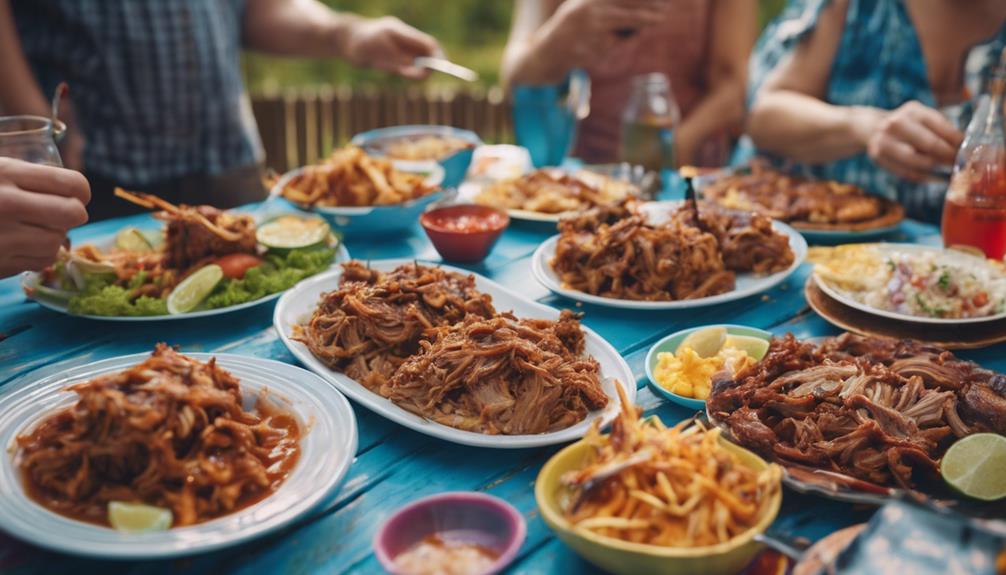
When planning portions, it’s important to take into account the diverse appetites of your guests. Not everyone will need the same amount of pulled pork per person, so tailoring your servings can make your event more enjoyable for everyone.
Here’s how you can consider different appetites:
- Adults vs. Children: Adults typically require more pulled pork per serving compared to children. For adults, you might need around 1/3 to 1/2 pound of meat, while children usually need about half of that.
- Teenage Boys: Teenage boys are known for their larger appetites and may need extra portions. Consider increasing their serving size to make sure they’re satisfied.
- Gender Differences: Men often have larger appetites than women. Adjusting the amount of pulled pork per person based on gender can aid in accurate portion planning.
- Individual Appetites: Some guests may have smaller or larger appetites than average. Knowing your guests well can help you tailor the amount of meat they need, ensuring no one leaves hungry.
Sides and Accompaniments
While contemplating diverse appetites, it’s also important to think about the sides and accompaniments that will complement your pulled pork. Heavier sides like mac & cheese or potato salad can reduce the amount of pulled pork per person because they’re more filling.
On the other hand, lighter sides such as salads might increase the portion size of pulled pork per person since they don’t fill you up as much. Balancing the sides and accompaniments appropriately can help you adjust the amount of pulled pork needed per person.
It’s essential to take into account both the quantity and variety of side dishes. Including a mix of heavier and lighter sides can help manage how much pulled pork each guest will consume. Here’s a quick guide to help you plan:
| Side Type | Examples | Impact on Pulled Pork Quantity |
|---|---|---|
| Heavier sides | Mac & Cheese, Potato Salad | Decreases pulled pork per person |
| Lighter sides | Green Salad, Fruit Salad | Increases in pulled pork per person |
| Filling accompaniments | Bread, Coleslaw | Balances pulled pork per person |
Time of Day

The time of day greatly influences how much pulled pork each guest will consume. Depending on when you serve the meal, guests’ appetites can vary significantly. Here’s how you can gauge the appropriate amount of pulled pork per person based on the time of day:
- Brunches or Lunches: During the daytime, people generally have lighter appetites. For brunches or lunches, you can plan for smaller portions, around 1/3 to 1/2 pound of pulled pork per person.
- Casual BBQs: Guests often indulge in multiple helpings when hosting a casual BBQ. This means you should prepare more pulled pork per person, aiming for about 1/2 to 2/3 pound each.
- Formal Dinners: The overall meal presentation and pacing typically call for more controlled portions at formal dinners. To align with this, serve around 1/3 to 1/2 pound of pulled pork per person.
- Evening Events: Evening events usually see heartier appetites. Guests are likely hungrier, so plan for larger servings, approximately 1/2 to 3/4 pound of pulled pork per person.
Other Protein Options
Considering the influence of the time of day on appetites, it’s also important to factor in how offering other protein options can impact the amount of pulled pork each guest will consume.
When you serve multiple entrees, like chicken, beef, or vegetarian options, guests are likely to sample a variety of dishes. This naturally reduces the amount of pork each person will eat. Thus, if you’re planning an event with several protein choices, you can decrease the pulled pork per pound you prepare.
The type of event also plays a significant role. For a casual backyard barbecue, guests might prefer a mix of proteins, leading you to adjust the amount of pork accordingly. On the other hand, if it’s a more formal setting, like a wedding, people might be more selective and consume less overall.
Guests’ preferences should be taken into account. If you know your attendees favor pulled pork, you mightn’t need to reduce the quantity too much. However, if they enjoy a variety of meats, plan for a smaller portion of pulled pork per person. Balancing the menu with other protein options will ensure everyone’s satisfaction without over-preparing the pork.
Leftover Tips
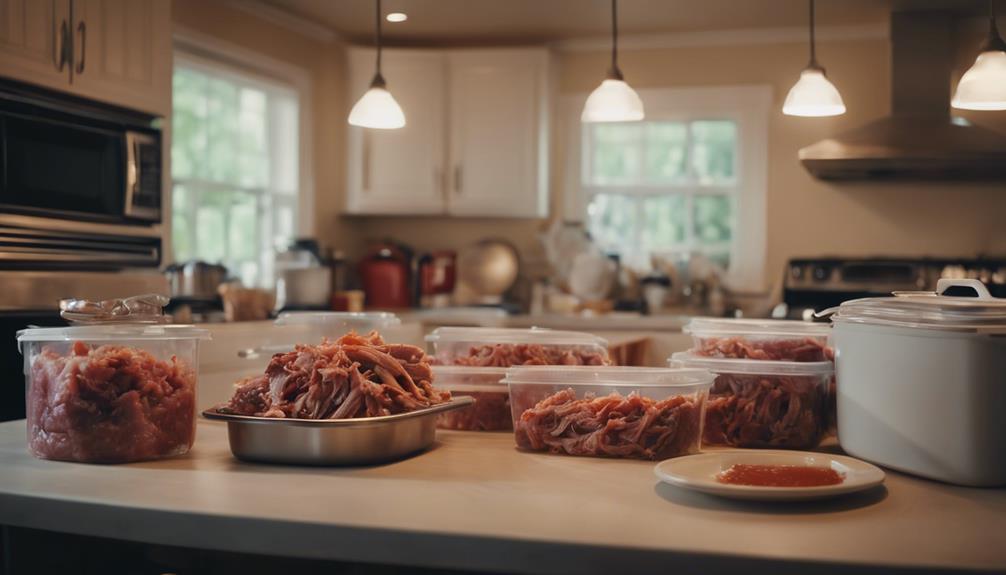
Storing leftover pulled pork correctly guarantees you can enjoy it for days or even months to come. To make the most of your delicious pulled pork, follow these simple steps:
- Fridge Storage: Store your leftover pulled pork in an airtight container and place it in the fridge. It will stay fresh for 2-3 days, perfect for quick meals later in the week.
- Freezing: If you want to keep it longer, consider turning it into frozen pulled pork. Just place it in an airtight container or a freezer bag, and it will last up to 3 months. This method ensures you always have a tasty meal ready to go.
- Thawing Pulled Pork: When you’re ready to enjoy your frozen pulled pork, thaw it overnight in the refrigerator. This gradual thawing process keeps the meat safe and maintains its flavor.
- Reheating: Reheat pulled pork in the oven at 250°F for 20-30 minutes or use a slow cooker until it reaches 165°F. For a quicker option, try microwave reheating in one-minute increments until it reaches the same temperature, ensuring it’s both safe and delicious.
Sandwich Calculations
When planning pulled pork sandwiches, aim for about a quarter-pound of cooked meat per person. This means you’ll need to calculate how many sandwiches per pound you can get from your pulled pork butt.
Typically, a pound of pulled pork yields around 3-4 sandwiches, depending on the size of your buns and the amount of fillings. If you’re using a pulled pork recipe that includes rich, flavorful side dishes, you might want to adjust the portion size slightly.
Serving pulled pork as a sandwich often requires less meat per person than serving it as a main dish, so keep that in mind. The amount of pulled pork you use should balance well with other sandwich components, ensuring a satisfying meal without overwhelming your guests.
Consider the bun size and any additional fillings like coleslaw, pickles, or onions when determining how much pulled pork per person you’ll need. These accompaniments can make the sandwiches more filling, allowing you to stretch your pulled pork further.
Conclusion
Aim for about a third to half a pound of cooked meat per person to guarantee your guests enjoy delicious pulled pork. Adjust to a quarter-pound for sandwiches.
When planning, always consider the event type, guest appetites, and time of day. Remember to account for weight loss during cooking, especially with bone-in pork. With these guidelines, you’ll serve just the right amount, keeping everyone satisfied and happy. Happy cooking!