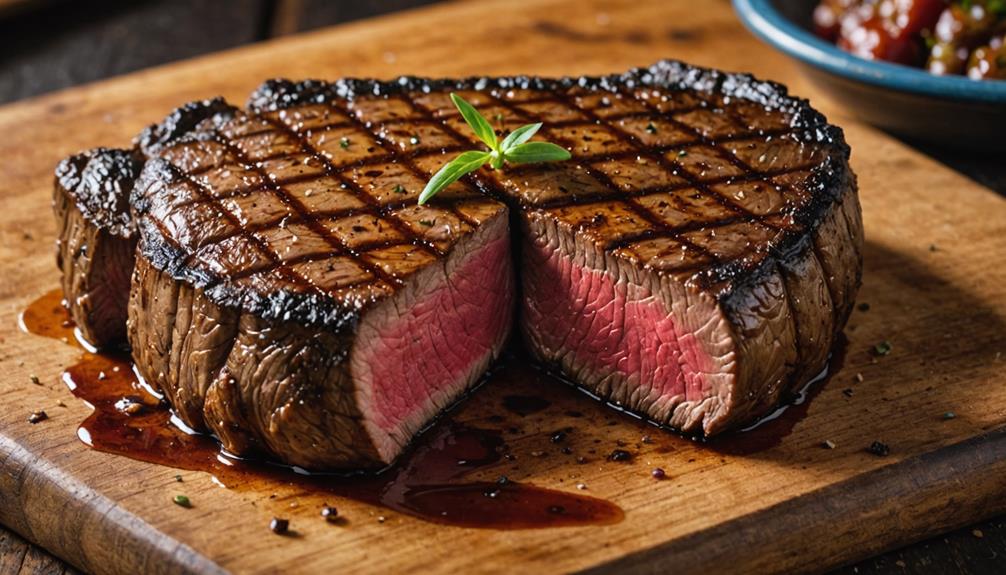
You might think you’ve seen it all when it comes to steak, but Blue Rare offers a whole new experience. This preparation is not just about a quick sear; it’s an art form that celebrates the essence of beef itself. As you explore the nuances between Blue Rare and its slightly more cooked counterparts, consider how the temperature and texture might play a role in your dining preferences. But are all steaks created equal when it comes to achieving that perfect blue hue? There are key factors that could change the way you approach this culinary adventure.
Table of Contents
Key Takeaways
- Blue rare steak is seared at high heat for a cool, raw center with a temperature of 115°F.
- Lean cuts like Tenderloin or Filet Mignon are ideal for achieving a tender blue rare steak.
- High-quality beef and proper kitchen cleanliness are essential for the safe consumption of blue rare steak.
- The unique texture is almost raw, offering a bold, beefy flavor preserved by minimal cooking.
- Pair with robust red wines and bold sauces for an enhanced dining experience.
Understanding Blue Rare Steak

When it comes to understanding rare blue steaks, precision is key. You aim for an internal temperature of 115°F, which makes it even rarer than a traditional rare steak. Achieving this requires exact timing and high heat to guarantee the outside is perfectly seared while keeping the inside cool and tender. The ideal choice for this is lean cuts like Tenderloin or Filet Mignon. These cuts aren’t only tender but also have minimal fat, allowing the focus to be on the meat’s purity and flavor.
The unique dark red or purple-blue color of the rare blue steak results from its minimal exposure to oxygen during cooking. Such a color might seem unusual, but it’s a confirmation of the steak’s freshness and the precision in preparation. Consuming blue rare steak is safe to eat as long as you use high-quality beef and adhere to proper food handling practices. Make sure to source your beef from reputable suppliers and maintain cleanliness in your kitchen. By understanding these elements, you can enjoy a blue rare steak that’s both delicious and safely prepared.
Cooking Techniques for Blue Steak
To achieve a perfect blue rare steak, you’ll need to focus on using high heat to sear the exterior quickly. This method guarantees the inside remains nearly raw, maintaining that distinct dark red or purple-blue hue. Timing is pivotal; just a brief sear on each side is all it takes to create the ideal texture and flavor.
High Heat Searing
Achieving the perfect blue rare steak hinges on mastering the art of high-heat searing. This cooking method requires you to quickly sear the steak, creating a flavorful crust while preserving a rare, dark red center. The challenge lies in reaching the ideal internal temperature, between 115-120°F, ensuring the center remains cool. Precise timing is pivotal; just a few seconds too long on the heat can transform your blue rare steak into something quite different.
To begin, you’ll need a hot skillet or grill. Preheat it until it’s almost smoking—this is where high heat searing comes into play. Once your cooking surface is ready, place the steak on it. The intense heat will instantly start forming that coveted crust. Listen for that satisfying sizzle as the steak hits the surface. Keep a close eye on the clock because every second counts.
Turning the steak only once is often recommended to build a uniform crust. This technique not only enhances the flavor but also maintains the desired rare interior.
Quick Cooking Time
With blue rare steak, speed is your ally. When cooking this unique cut of steak, you need to act fast because it’s all about achieving that distinct texture and flavor. Here’s how you can master this skill:
- Start with High Temperature: Your pan or grill should be extremely hot before you even think about placing the steak on it. The high temperature guarantees a quick sear, locking in juices while the inside remains almost raw.
- Cook for a Short Amount of Time: You’re aiming for a quick cooking process—just enough to achieve a seared exterior. Typically, this means cooking each side for no more than 30-60 seconds. Anything longer, and you risk overcooking the inside.
- Focus on the Internal Temperature: Use a meat thermometer to confirm your blue steak is cooked to an internal temperature of 115-120°F. This guarantees the inside is cool and retains its signature dark red or purple-blue hue.
Safety of Blue Steak
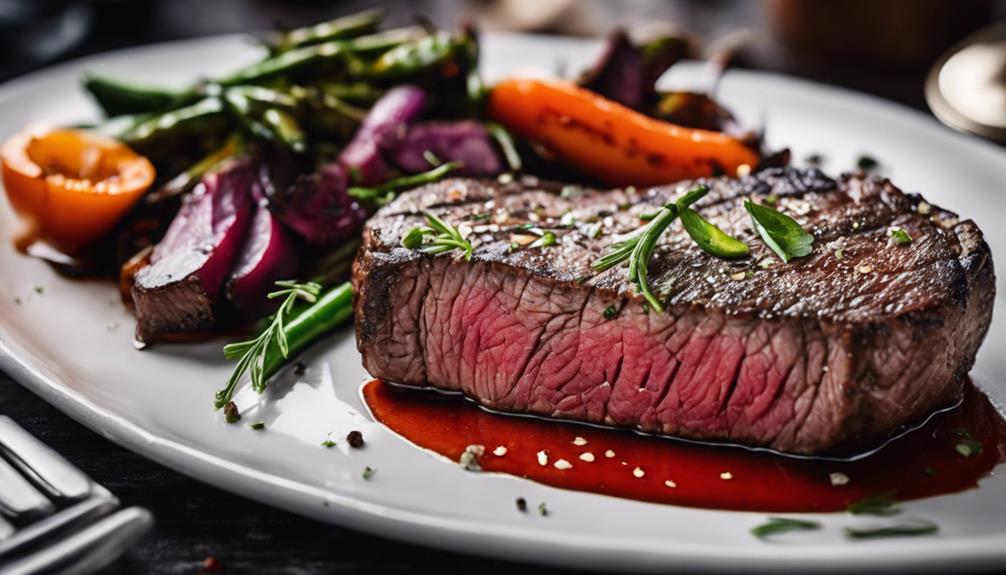
When it comes to enjoying a blue rare steak, ensuring its safety is a top priority. Blue Steak Safe practices start with cooking blue steak at a high temperature for a short time. This method is vital because it effectively kills any harmful bacteria on the surface.
You need to use the highest quality beef since its interior is untouched by heat and must be inherently safe. Ensuring your meat is fresh and well-handled is necessary for preventing any health risks.
Proper handling also means keeping your kitchen clean and avoiding cross-contamination. Wash your hands, utensils, and surfaces that come into contact with raw beef. These practices are just as significant as cooking when it comes to keeping your rare blue steak safe to eat.
If you’re concerned about specific health issues, consult a healthcare provider. They can offer tailored advice based on your personal health profile. Ultimately, enjoying blue rare steak responsibly allows you to savor a delicious and unique dining experience.
Best Cuts for Blue Steak
Selecting the right cut of beef is crucial for a perfect blue rare steak. When you’re aiming for that melt-in-your-mouth experience, tender cuts are your best bet. Lean cuts with minimal fat content help maintain the desired cooking method. Let’s explore the top choices:
- Filet Mignon: Known for its tenderness, this cut is from the tenderloin, offering a smooth, buttery texture. It’s a low-fat cut, making it ideal for blue steak enthusiasts seeking that juicy perfection.
- Flat Iron: This gem is the second-most tender cut available, making it a fantastic option for blue rare preparation. It delivers a rich flavor profile while maintaining the tenderness you crave, striking a perfect balance between taste and texture.
- Sirloin Tip: While slightly less tender, this cut is a flavorful option. It offers a robust taste that pairs wonderfully with the unique texture of a blue steak. Being a lean cut, it guarantees a juicy result without excessive fat.
When choosing cuts for blue steak, focus on those that promise tenderness and flavor without the excess fat. These options will elevate your blue steak experience to new heights.
Blue Steak Temperature Guide
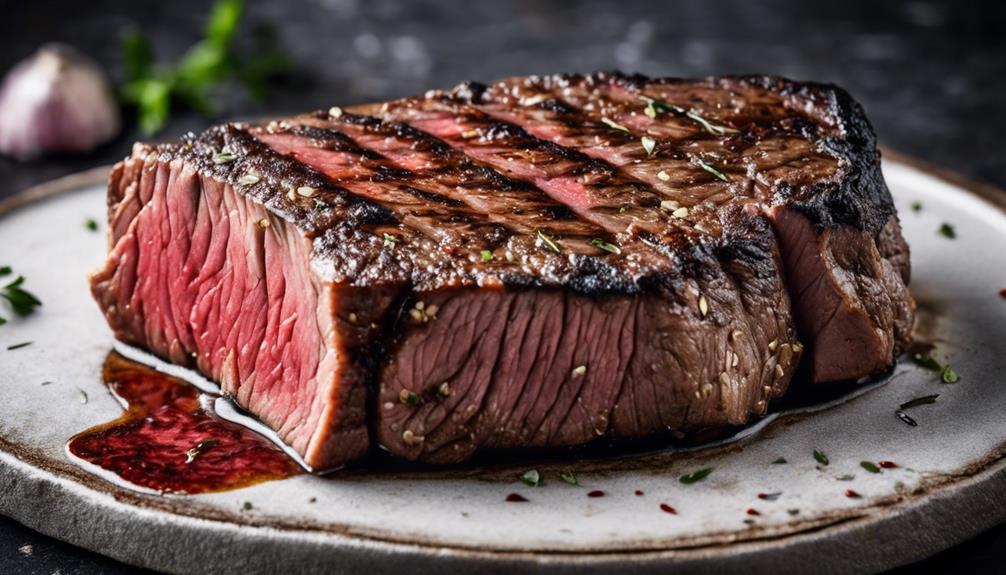
Achieving the perfect blue rare steak is a delicate balance of timing and temperature. If you’re aiming for this elusive preparation, you need to focus on getting the internal temperature just right. Blue rare steak, or Pittsburg style, is known for its high-heat charred exterior while maintaining a dark, cool center. The key is to cook it to an internal temperature of 115°F. This guarantees the steak remains extremely rare, with a distinctive dark red or even purple-blue center, setting it apart from a traditional rare steak.
To create this culinary masterpiece, preheat your grill or pan to a very high heat. You want to sear the steak quickly, creating that desired charred crust. The high heat is essential because it allows the outside to cook rapidly while keeping the center nearly raw.
Remember, the internal temperature shouldn’t exceed 115°F; otherwise, it will edge closer to rare, losing the true blue character.
Mastering this technique requires practice and precision, but with careful attention to temperature and timing, you’ll achieve a perfectly cooked blue rare steak, delighting any steak aficionado with its unique taste and texture.
Blue Steak Vs. Rare Steak
When comparing blue and rare steaks, you’ll notice that the cooking temperature plays a key role in their differences.
Blue steaks are seared quickly, keeping the center cool and almost raw, while rare steaks have a warmer, slightly more cooked interior.
This affects texture and flavor, with blue steaks offering a tender bite and a unique, bold taste that stands apart from the slightly more developed flavors of rare steaks.
Cooking Temperature Differences
A key difference between rare blue and rare steak is the cooking temperature, which greatly impacts their texture and appearance. Blue rare steak is cooked to an internal temperature of 115°F, while rare steak reaches 125°F. This variation in cooking temperature results in a cooler center for a blue rare steak, as it spends less time exposed to heat.
The darker red or even purple-blue hue of a blue rare steak is due to its minimal exposure to oxygen, indicating its rarer level of cooking compared to a rare steak.
Achieving a perfect blue rare steak isn’t just about the temperature; it requires precise timing and high heat. This guarantees a quick sear on the outside, leaving the inside cooler and darker red. Here’s what you need to know:
- Internal Temperature: Blue rare at 115°F vs. rare at 125°F.
- Cooking Process: Blue Rare needs precise timing and high heat for a quick search.
- Visual Appearance: Blue Rare has a cooler center with a darker red color.
Texture and Flavor Profiles
Although both blue rare and rare steaks are known for their tenderness, their texture and flavor profiles differ subtly but noticeably. When a blue steak is cooked, you’ll notice its cooler center, which gives it a unique, almost raw texture. This is achieved by searing the outside at high heat, requiring precise timing to maintain the 115-120°F internal temperature. The blue steak’s color is a darker red or even purple-blue, hinting at its rawness and offering an almost melt-in-your-mouth experience. The cool center provides a bold, beefy flavor, unmasked by extensive cooking, making it a distinct choice for steak enthusiasts.
In contrast, a rare steak has a warmer center, still maintaining exceptional tenderness but offering a slightly firmer texture than its blue counterpart. The rare steak’s interior is more evenly cooked with a deep red hue, providing a subtle difference in taste.
The warmer center of a rare steak slightly enhances the natural juices, resulting in a more rounded flavor profile that still emphasizes the quality of the beef. Choosing between the two depends on your preference for texture and the degree of the meat’s rawness you wish to experience.
Benefits of Blue Steak

Savoring a blue rare steak means experiencing beef in its most tender and juicy form, with natural flavors fully preserved. The cooking process for blue steak is brief, allowing the rare steaks to maintain their tenderness and juiciness. This method results in rich flavors and an intense beef flavor that truly showcases the best cuts of meat. The quick sear locks in juices while breaking down minimal connective tissue, offering a unique texture experience.
When enjoying blue steak, consider these benefits:
- Maximum Flavor Retention: The minimal cooking allows for the preservation of the beef’s natural flavors, offering a robust and authentic taste.
- Enhanced Tenderness: Rare steaks like blue steak are incredibly tender, attributed to their brief exposure to heat, which keeps the meat soft and juicy.
- Intense Beef Experience: The intense beef flavor is unmatched, making it a favorite among steak aficionados who appreciate the depth of taste.
Pair your blue steak with red wines like Malbec or Cabernet Sauvignon to complement its rich flavors. Enhance your meal with bold sauces like chimichurri and textured sides, such as crusty bread, for a well-rounded dining experience. Immerse yourself in this culinary delight and enjoy the primal essence of beef.
Dining Experiences in Dallas
After appreciating the rich flavors and tenderness of blue rare steak, discovering where to enjoy such culinary delights in Dallas becomes equally crucial. Explore R for a dining experience that’s truly exceptional. Located in downtown Dallas, this renowned steakhouse is celebrated for its delicious steaks and inviting atmosphere, making it a must-visit for steak enthusiasts.
At Y.O. Steakhouse, experienced chefs have mastered the unique cooking style necessary to prepare rare blue steak. They ensure each steak is cooked impeccably, offering a tender and juicy experience that lingers long after the meal. Whether you’re a seasoned blue rare steak aficionado or trying it for the first time, you’re in for a memorable dining adventure.
The menu at Y.O. Steakhouse offers a diverse selection of items, but the blue rare steak remains a standout. Its rich flavor and meticulous preparation make it a top choice for anyone seeking a distinctive culinary journey.
To secure your place at this esteemed establishment, make a reservation and get ready to indulge in a new and memorable dining experience in Dallas.
Pairing Suggestions for Blue Steak

When it comes to enhancing the flavors of a blue rare steak, pairing it with the right accompaniments can make all the difference. The rich flavors of such steak cuts are best complemented by carefully chosen sides and drinks. Here are some pairing suggestions to elevate your dining experience:
- Red Wines: Opt for robust wines like Malbec or Cabernet Sauvignon. These wines enhance the blue rare steak’s rich flavors, creating a harmonious balance with their bold tannins and deep notes.
- Bold Sauces: A vibrant chimichurri can elevate your steak with its fresh, zesty kick. This sauce complements the intense beef taste, adding depth without overwhelming the natural flavors.
- Textural Contrast: Consider serving crusty bread or crispy potatoes. These provide a delightful crunch that contrasts with the tender steak, creating a satisfying bite.
Light seasoning on your vegetables or a simple salad can offer a revitalizing balance to the richness of the steak. Don’t shy away from experimenting with herbs and spices to further enhance the experience. Whether you’re a seasoned gourmand or a curious newcomer, these pairing suggestions will make your blue rare steak truly memorable.
Frequently Asked Questions
Is It Okay to Eat Blue Rare Steak?
When considering unique cooking preferences, it’s important to balance taste preferences and food safety. Chef recommendations often highlight meat quality and cultural differences. Always prioritize health concerns and dietary restrictions, aligning with current culinary trends for the best enjoyment.
What Is Blue Rare Steak Called?
You’d call it “very rare” or “extremely rare.” For best cuts, try filet mignon. Use high heat for searing. Its flavor profile is rich. Preferred seasonings include salt and pepper. Pair with red wine, roasted veggies, and salad.
Is It Blue or Bleu Steak?
You’re wondering if it’s “blue” or “bleu” steak. Focus on cooking techniques, meat quality, and flavor preferences. Guarantee temperature control, follow culinary trends, maintain food safety, enhance presentation styles, use proper seasoning, and prioritize ingredient sourcing.
Does Blue Rare Steak Have Blood?
You’re wondering if it contains blood. It doesn’t; it’s myoglobin. Focus on cooking techniques and meat temperature for safety. Preferred cuts vary, but steak thickness affects flavor profile. Experiment with seasoning options and sides to enhance nutritional benefits.
Conclusion
Indulging in a blue rare steak offers a unique and bold culinary experience that every steak enthusiast should try. You’ll appreciate the intense beefy flavor and melt-in-your-mouth texture that only this preparation can deliver. By choosing the right cut, ensuring proper cooking techniques, and pairing it with complementary sides and beverages, you’ll elevate your dining experience. Whether you’re in Dallas or elsewhere, savor the freshness and quality that make blue rare steak truly stand out.