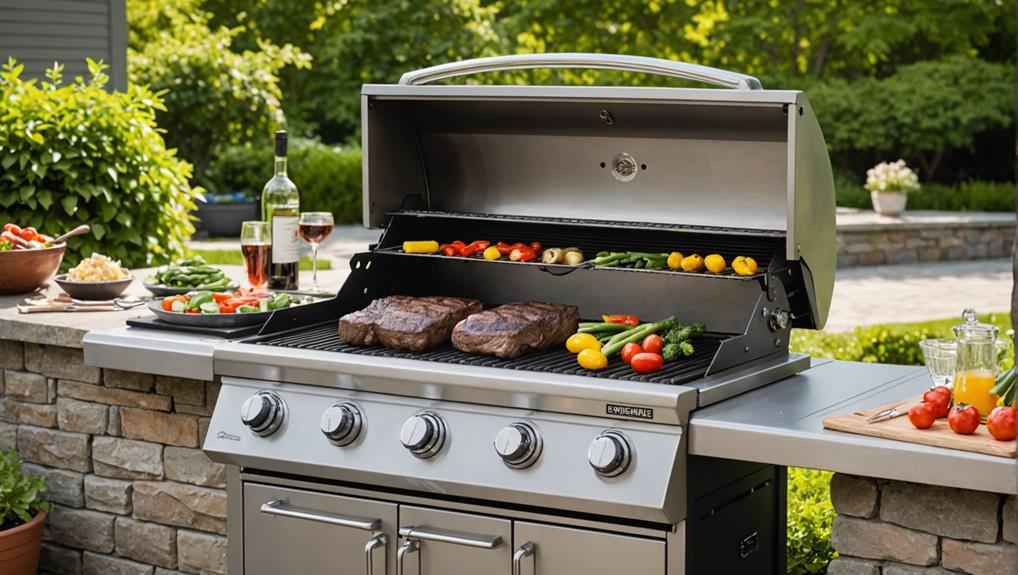
You’ve probably wondered which propane grill truly stands out among the many options available. While the Weber Genesis E-330 is often praised for its stainless steel burners and durability, other contenders like the Monument Grills 3-Burner or the Royal Gourmet 4-Burner cater to different preferences and needs. Each grill brings unique features to the table, but how do you choose the right one for you? Before making a decision, consider key factors such as cooking area, ignition systems, and budget constraints. Let’s explore what sets these grills apart and which might just become your backyard staple.
Table of Contents
Key Takeaways
- Weber Genesis E-330 offers excellent heat distribution and durability with three stainless steel burners.
- Monument Grills 3-Burner Portable Grill is budget-friendly with LED controls and a clear view lid.
- Royal Gourmet 4-Burner Grill provides ample cooking space with dual side shelves for added convenience.
- Propane grills offer quick heating, portability, and high-temperature cooking, which makes them ideal for camping and outdoor events.
- Consider ease of assembly and heat retention when selecting a propane grill for efficient performance.
Top Propane Grills
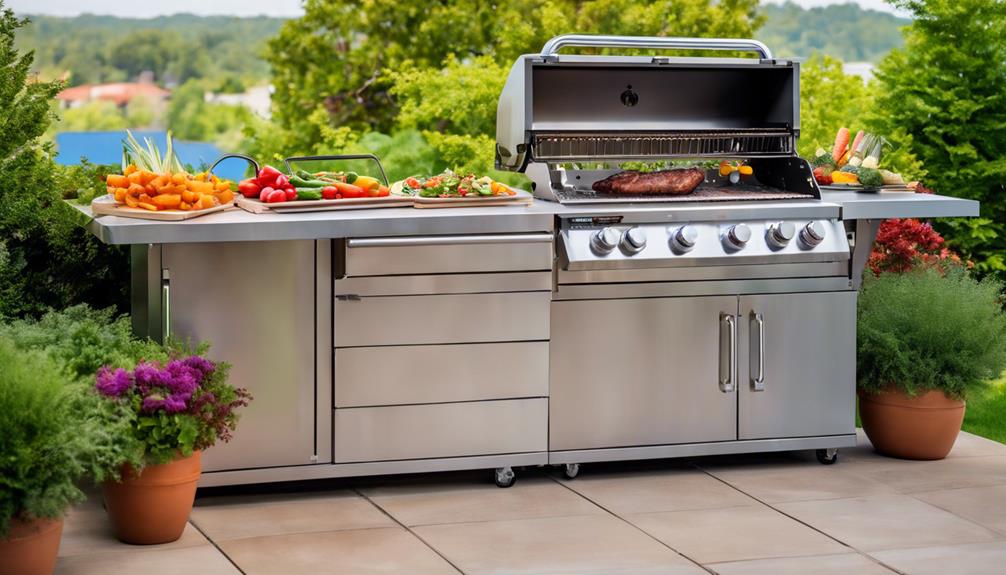
When it comes to choosing a propane grill, there are several top-rated options that combine performance and convenience.
The Weber Genesis E-330 stands out with its three stainless steel burners, ensuring even heat distribution and reliable cooking performance. Known for its durability, this propane grill is perfect for those who enjoy cooking outdoors frequently. With a sleek black design, it’s as stylish as it’s functional.
If you’re looking for something with a modern twist, consider the Monument Grills 3-Burner Portable Propane Gas Grill. Its unique Clear View Lid lets you keep an eye on your food without losing heat, and the LED controls add a touch of elegance and ease to your grilling experience.
For those needing more space, the Royal Gourmet 4-Burner Propane Gas Grill offers a spacious cooking surface and a stainless steel upper lid. Its dual side shelves provide ample room for meal prep.
Lastly, the Coleman Cookout 3-Burner Propane Gas BBQ Grill boasts a generous 535 sq. in. cooking area and Instastart Ignition, making it a convenient choice for larger gatherings. Each option caters to different grilling needs, ensuring you’ll find the perfect fit.
Testing Methodology
When you’re selecting a propane grill, understanding the thorough evaluation process can help you make an informed decision. Our performance and usability testing assesses everything from heat distribution to searing abilities, ensuring you know exactly how each grill performs.
We’ll guide you through the essential criteria so you can choose a grill that meets your needs and preferences.
Comprehensive Evaluation Process
In order to provide a detailed assessment of propane grills, a carefully crafted testing methodology is used to ensure each model’s performance and quality are accurately evaluated. You’ll find that this process involves examining various factors, starting with the ease of assembly, which sets the tone for the overall user experience.
Next, the focus shifts to heat distribution, where models like Weber are assessed for their ability to spread heat evenly across the cooking surface. This guarantees you get perfectly cooked meals every time. High BTUs also come into play here, as they’re crucial for achieving peak performance and searing capabilities.
Durability is another crucial aspect of this evaluation. You’re searching for a grill that’s not just a temporary addition to your backyard but a long-term investment. Top brands like Weber are tested for their ability to withstand the elements and deliver consistent performance over time.
Additionally, the advantages of four-burner grills are examined, providing insights into their versatility and efficiency. Warranty coverage is also taken into account, ensuring you’re safeguarded in your investment. This thorough approach helps identify the finest propane grills, focusing on features that matter most to you as a consumer.
Performance and Usability Testing
To thoroughly assess the performance and usability of propane grills, a detailed testing methodology is applied. You’ll find that experts leave no stone unturned, starting with heat distribution analysis to guarantee your food cooks evenly. This is important for achieving a perfect meal every time. Searing abilities are another focal point, as they define the grill’s capability to lock in flavors with a delicious crust.
Assembly tests play a pivotal role in evaluating how easy or challenging it is to set up your grill. You’ll appreciate a grill that’s straightforward to assemble, saving you time and frustration. During these tests, experts also assess heat retention, a key factor in maintaining consistent cooking temperatures.
On top of that, smart grills undergo scrutiny for their cooking alerts, ensuring they provide helpful feedback during use.
In your decision-making, consider smooth-turning dials for precise control, spacious side tables for convenience, and wheels for easy mobility. The durability of brands like Weber and the advantages of four-burner options emerge from these evaluations. Plus, don’t overlook warranty coverage, as it signifies the manufacturer’s confidence in their product, guaranteeing long-term performance and customer satisfaction.
Key Features to Consider
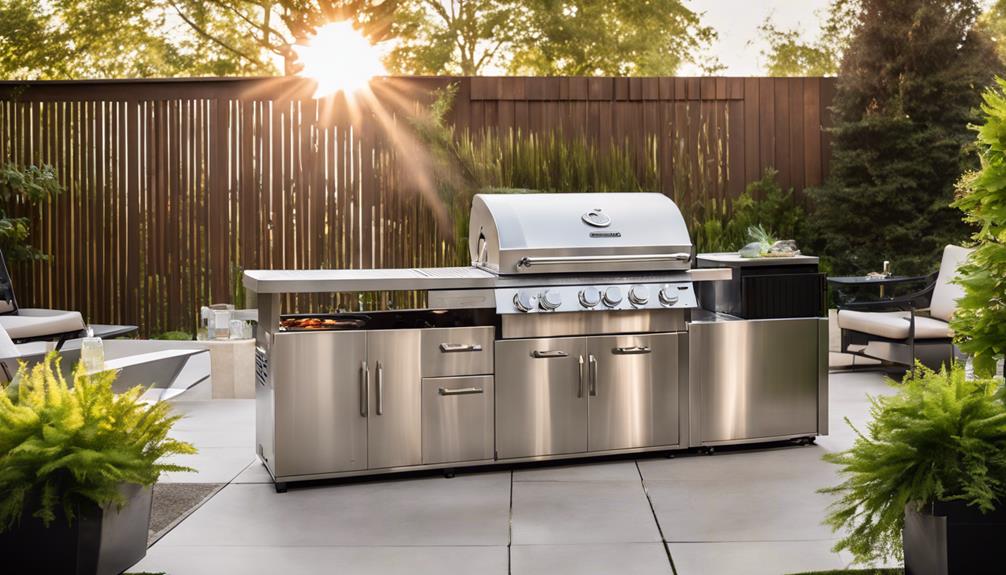
Choosing the right propane grill involves focusing on important features that enhance your grilling experience. Start by considering the size of the primary cooking area. Medium grills offer between 401-520 sq. in., providing versatile cooking options for family gatherings or small parties. High-quality cooking grates ensure even heat distribution, which is vital for achieving that perfect sear on your steaks or veggies.
Next, take note of the grill’s assembled width. You’ll find options ranging from 40.16 to 50.98 inches, so make sure your chosen grill fits comfortably in your intended space. Grills like the Weber Genesis E-330 and Monument Grills are highly rated for their quality performance and features. They offer reliable results, making them worth considering.
Additionally, be prepared for some assembly upon purchase. Checking this detail ahead of time ensures you know what to expect and can plan accordingly. Models like the Weber Spirit II E-210 and E-310, priced under $500, provide important features such as quick heating and even cooking, along with propane tank gauges for convenience.
Here’s a quick overview:
| Feature | Detail |
|---|---|
| Primary Cooking Area | 401-520 sq. in. |
| Assembled Width | 40.16 – 50.98 inches |
| Quality Brands | Weber Genesis E-330, Monument Grills |
| Assembly Required | Yes |
| Budget Models | Weber Spirit II E-210, E-310 (< $500) |
Propane vs. Natural Gas
When deciding between propane and natural gas for your grill, consider the cost, installation, and cooking efficiency.
Propane offers flexibility with portable tanks but tends to be more expensive per unit than natural gas.
On the other hand, natural gas requires professional installation but provides a steady, cost-effective fuel source.
Cost Comparison Factors
Why consider the cost when choosing between propane and natural gas grills? Understanding the price range and operating costs can significantly impact your decision.
Propane grills typically start in the $400+ range, which may seem steep initially. However, they offer the convenience of propane tanks that are easily swappable, allowing for uninterrupted grilling sessions. This portability makes propane grills a flexible option if you need to move your grill around frequently.
In contrast, natural gas grills often have a lower ongoing cost due to the lower price of natural gas compared to propane. While the initial cost may be similar or slightly lower, the savings accumulate over time as natural gas is generally more budget-friendly. This makes them a wise choice if you’re planning to use your grill frequently and have access to a gas line.
When making a cost comparison, consider your budget, how often you grill, and the availability of gas sources in your area. Both propane and natural gas grills offer similar heat output and performance, reaching temperatures up to 600°F. Ultimately, your choice should align with your financial plans and convenience needs.
Installation and Setup
Before diving into the world of outdoor cooking, it’s important to think about the installation and setup requirements for propane and natural gas grills. If you’re considering a propane grill, you’ll need a propane tank for fuel. The setup is straightforward: connect the tank to the regulator and burner, making the grill quite portable. This flexibility is perfect for camping or tailgating.
Natural gas grills, on the other hand, connect directly to your home’s gas line, offering a continuous fuel supply without the hassle of refilling tanks. However, natural gas setups require professional installation to guarantee safety, as they involve a dedicated gas line connection. Once installed, these grills are stationary, making them ideal for a permanent outdoor kitchen.
Here’s a quick comparison to help you decide:
| Feature | Propane Grill | Natural Gas Grill |
|---|---|---|
| Fuel Source | Propane Tank | Home’s Natural Gas Line |
| Installation | DIY-friendly | Requires Professional Installation |
| Portability | Highly Portable | Stationary |
| Ideal Use | Camping, Tailgating | Permanent Outdoor Kitchen |
With these factors in mind, consider your outdoor cooking needs and preferences. Whether you choose the mobility of a propane grill or the convenience of a natural gas setup, both options have their unique benefits.
Cooking Efficiency Differences
Considering the differences in cooking efficiency between propane and natural gas grills, you’ll find that propane grills often come out ahead. Propane’s higher energy content per cubic foot allows it to heat up quickly and reach higher temperatures, which means your grill gets hot in no time. This efficiency translates to faster cooking times, letting you enjoy your meals without unnecessary delays. With superior heat distribution, propane grills excel at searing meats, giving you those perfect grill marks and a delicious crust.
While natural gas might be cheaper and more convenient for continuous use, it doesn’t match propane’s intense heat output. This is especially pivotal if you’re looking to quickly sear steaks or achieve high-temperature grilling.
Propane’s portability also adds to its appeal, as you can take your grill wherever you please, unlike natural gas grills that are tethered to a fixed gas line.
Ultimately, the choice between propane and natural gas depends on your cooking preferences and needs. If you prioritize cooking efficiency and portability, propane is the way to go. Just remember, propane offers unmatched heat and flexibility, making it a top choice for many grilling enthusiasts.
Evaluating Grill Performance
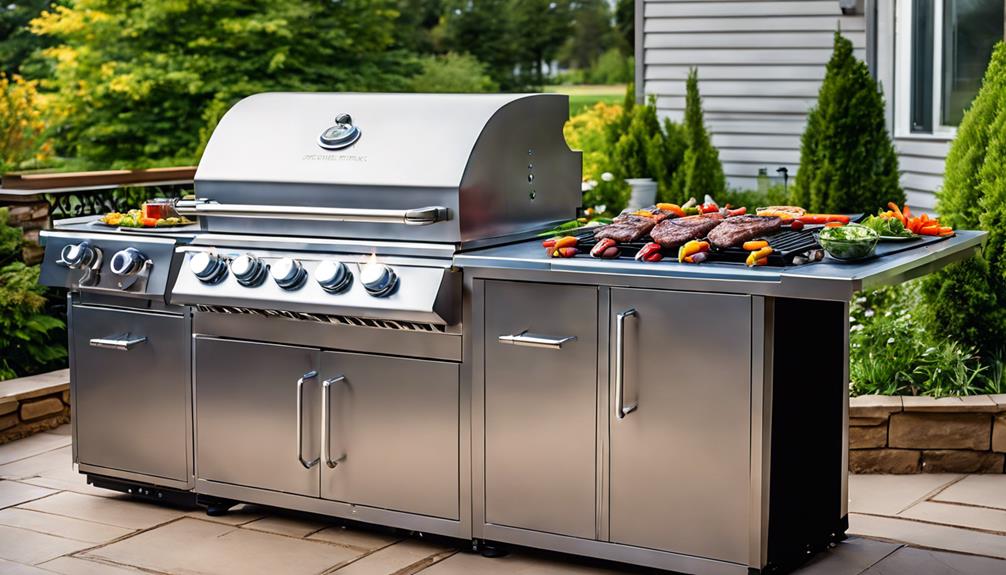
Evaluating grill performance means delving into how well a propane grill manages heat distribution, cooking evenness, and overall functionality. When you’re considering a grill, start by inspecting its heat distribution. Uneven heat can lead to hotspots, making it challenging to achieve that ideal cook. A good grill should provide consistent heat across its surface, allowing you to sear steaks with accuracy.
Speaking of searing, the grill’s searing abilities are essential. High temperatures should be quickly attained and maintained to seal in juices and flavors.
Another important factor is fuel consumption. Efficient grills use propane economically, so you’re not constantly refilling the tank. Evaluating how a grill retains heat and recovers after opening the lid is also vital. You want a grill that rebounds quickly to the desired temperature, ensuring your food cooks uniformly.
Don’t overlook the ease of assembly and cleaning. A grill that’s simple to put together and maintain will enhance your grilling experience. Pay attention to grill construction materials and additional features that might assist in performance. Understanding these elements will help you find a propane grill that meets your cooking needs effectively.
Budget vs. Premium Options
While choosing a propane grill, understanding the differences between budget and premium options can greatly impact your decision. Budget grills, like the Monument Grills Stainless 4-Burner model, offer an affordable solution with a solid performance and a 1-year warranty.
On the other hand, premium models, such as the Weber Genesis E-335 Gas Grill, provide a more extensive feature set, including a spacious cooking surface and a 12-year warranty.
When considering budget vs. premium options, keep these key factors in mind:
- Price Range: Budget grills typically cost around $449, like the Monument Grills model, while premium grills can range from $1,099 to $1,352, such as the Weber Genesis E-335.
- Features: Premium options often boast additional features, including large side tables and side burners, which enhance your grilling experience. Budget models focus on delivering essential features without the extra frills.
- Cooking Space: A significant difference lies in cooking space—premium grills offer more room to cook multiple dishes simultaneously, perfect for entertaining larger groups.
Expert Picks and Reviews
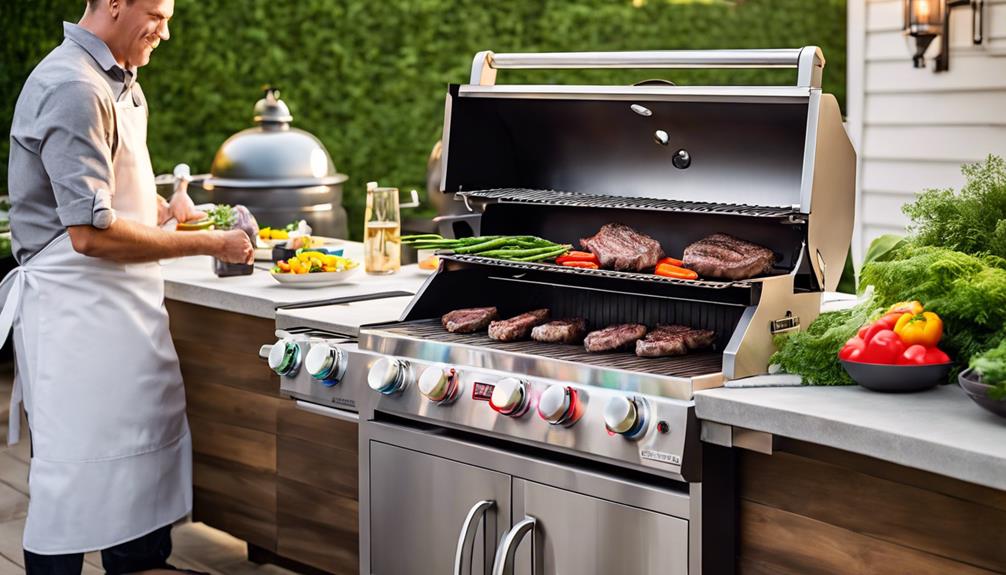
When choosing between budget and premium propane grills, expert picks and reviews can guide you to the best options for your needs. If you’re looking for a high-performing grill under $500, the Weber Spirit II E-310 is a top contender. It heats quickly, cooks evenly, and includes features like a propane tank gauge. It’s perfect for those who want efficiency without breaking the bank.
For those who need larger capacity and versatility, the Weber Genesis E-325 is recommended. This grill offers multi-zone cooking, sturdy construction, and easy cleaning with removable parts. It’s ideal for hosting larger gatherings without compromising on quality.
The Saber Select Gas Grill is known for its user-friendliness and great searing results. It provides a large cooking area and features removable infrared plates, making it easy to clean. It’s moderately priced, offering excellent value for those who prioritize ease of use and maintenance.
| Grill Model | Key Features | Price Range |
|---|---|---|
| Weber Spirit II E-310 | Quick heating, propane tank gauge | <$500 |
| Genesis E-325 | Large capacity, multi-zone cooking | >$500 |
| Saber Select Gas Grill | User-friendly, removable infrared plates | Moderate |
Maintenance and Care Tips
To keep your propane grill in top condition and guarantee it lasts for years, regular maintenance is necessary. By focusing on key areas, you can ensure safe and efficient grilling. Start by cleaning the grates and burners regularly. This prevents grease buildup and ensures even heat distribution, which is vital for perfectly cooked meals. Please don’t overlook the grease trap, as neglecting it can lead to dangerous flare-ups.
Here are some essential tips to maintain your grill effectively:
- Inspect and clean the drip pan and grease tray: Over time, these can accumulate grease, posing a fire hazard. Regular cleaning keeps your grill safe and functioning well.
- Check the propane tank for leaks: Apply a soapy water solution to the connections and valves. If you see bubbles forming, there’s a leak that needs addressing immediately.
- Store your propane tank correctly: A well-ventilated area away from direct sunlight and heat sources is ideal. This prevents potential hazards and prolongs the tank’s life.
Additionally, always cover your grill when not in use. This simple step protects it from the elements and helps extend its lifespan, keeping it ready for your next barbecue adventure.
Frequently Asked Questions
What Is the Best Brand for Propane Grills?
You’re comparing propane grill brands and should focus on top features, customer reviews, and price comparison. Weber and Napoleon excel in quality and innovation, while Char-Broil and Monument offer budget-friendly options. Cuisinart’s versatility is also notable.
Who Is Weber Grills’ Biggest Competitor?
You’re wondering about Weber Grills’ biggest competitor. Char-Broil stands out in the Char Broil vs. Weber debate. Napoleon Grills also competes fiercely, and Dyna Glo vs. Weber discussions highlight market variety in choosing your ideal grill.
What Grill Will Last the Longest?
You’re wondering which grill will last the longest. Focus on longevity factors like stainless steel construction and warranty coverage. Top maintenance tips include regular cleaning and covering the grill. Choose reputable brands with extensive warranties for durability.
Are Monument Grills as Good as Weber?
You’re comparing Monument vs. Weber performance, durability, and price point. Monument offers solid performance and lower prices, while Weber excels in durability and customer service. Decide based on whether you prioritize cost or long-lasting quality.
Conclusion
In your search for the best propane grill, consider what matters most to you. Whether it’s the durability of the Weber Genesis E-330, the convenience of Monument Grills‘ features, or the spaciousness of the Royal Gourmet, there’s a perfect fit for every grilling enthusiast. Weigh the pros and cons of each model, keeping your budget and needs in mind. With careful consideration, you’ll find a grill that delivers excellent performance and enhances your outdoor cooking experience.