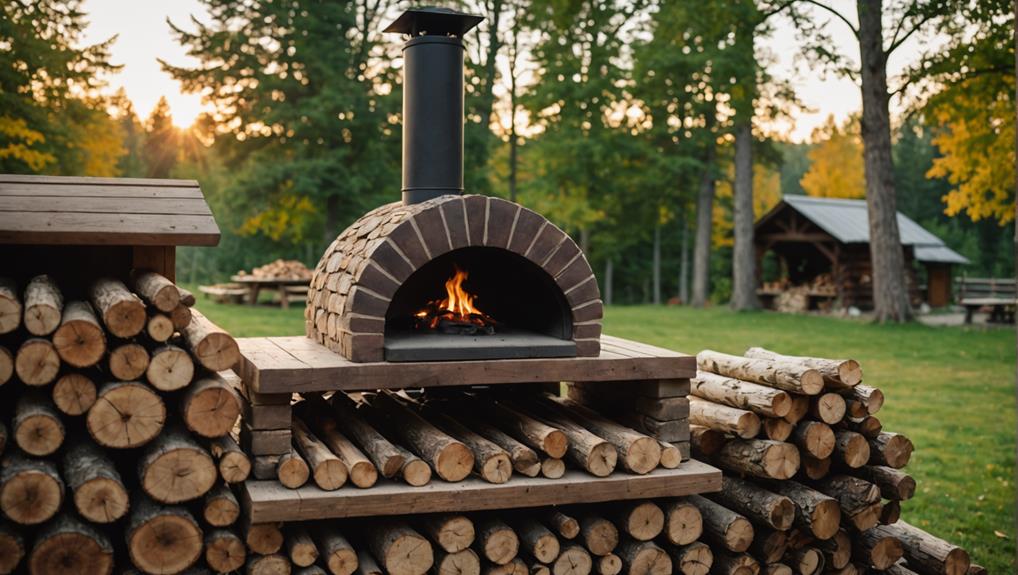
When aiming for that perfect Wood for a Pizza Oven, the type of wood you choose can make a significant difference. Seasoned hardwoods like ash, maple, cherry, apple, and oak don’t just burn hot and maintain high heat levels; they also infuse your pizza with distinct flavors.
Each type of wood brings something unique to the table—oak offers a steady burn, while applewood adds a hint of fruitiness. But why is wood choice vital, and what should you avoid to guarantee the best results? Let’s explore further to find out.
Table of Contents
Key Takeaways
- Hardwoods like ash, oak, and maple burn hot and maintain steady heat.
- Apple and cherry wood add subtle fruity and smoky flavors to pizza.
- Avoid softwoods like pine and fir due to excessive smoke and creosote.
- Use properly seasoned wood with low moisture content for efficient burning.
- Store wood elevated and covered to keep it dry and ready for use.
Why Wood Choice Matters
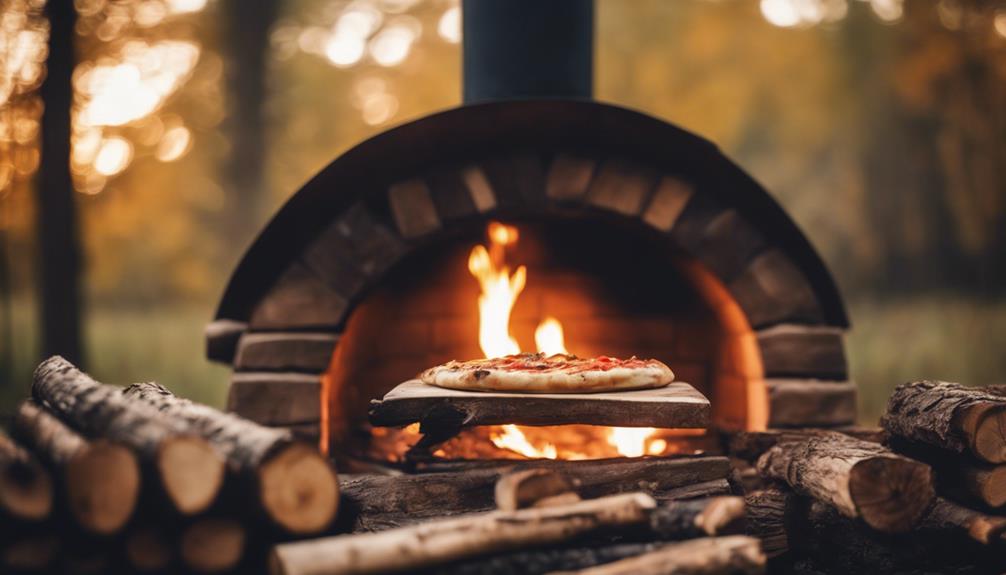
Selecting the appropriate wood for your pizza oven is vital because it directly impacts the flavor and quality of your food. Using the right wood guarantees that your pizza cooks evenly and tastes delicious. When cooking in outdoor pizza ovens, the wood you choose can infuse your pizza with unique, smoky, or fruity flavors, making your culinary creations stand out.
The best wood for pizza ovens is hardwood, which burns hotter and longer than softwood. Hardwoods like ash, maple, cherry, apple, and oak are ideal. They produce the right heat and impart pleasant flavors to your pizza. On the other hand, softwoods like pine and fir burn quickly and produce more smoke and creosote, which can lead to unpleasant flavors and excessive soot in your oven.
It’s also essential to use properly seasoned wood with low moisture content. Wet or green wood won’t burn efficiently, leading to inconsistent cooking and poor heat control. Seasoned firewood ensures steady heat and better flavor infusion, making your outdoor pizza oven experience more enjoyable.
Top Hardwood Options
When choosing the best wood for your pizza oven, ash, maple, cherry, apple, and oak are frequently the top hardwood options. These seasoned hardwoods are known for their ability to burn hot and maintain high heat, which is essential for the perfect wood-fired pizza. Oak, for instance, is one of the best woods to use because it burns slowly and consistently, providing a steady temperature that’s important for cooking pizzas evenly.
Applewood is another excellent choice, especially if you’re after a hint of fruity flavor in your outdoor pizza. It burns hot and dry, adding a unique taste without overwhelming the other ingredients. Maple and cherry also offer a balanced burn, infusing your pizza with subtle smoky notes that enhance the overall flavor.
Ideal Fruitwoods
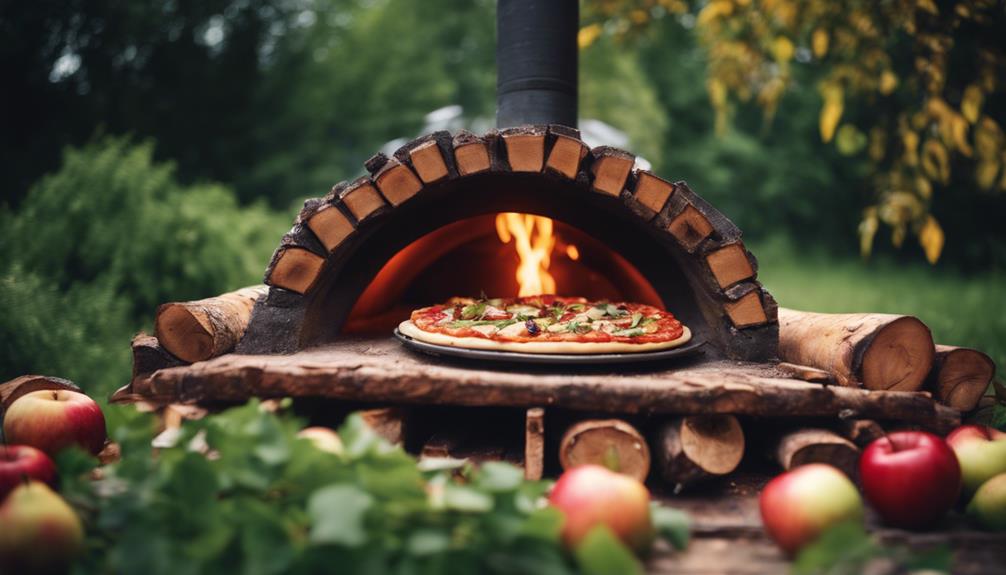
Choosing the right fruitwood for your pizza oven can elevate flavor with sweet and fruity undertones. Fruitwoods like apples, cherries, and pears are excellent for perfect taste in your wood-fired oven. Applewood is particularly popular, imparting an authentic pizzeria taste due to its subtle fruity notes.
When you use applewood, you’ll notice how its aromatic qualities enhance the overall flavor profile of your pizza, making every bite a delight. Cherry wood is another fantastic option, adding a delicate, slightly smoky flavor that complements a variety of toppings.
Whether you’re making a classic Margherita or a more adventurous gourmet pizza, cherry wood’s unique characteristics will amplify the taste. Its aromatic qualities create a more complex flavor profile, bringing out the best in the dough and the toppings.
Pear wood, on the other hand, offers a mild and sweet essence. It’s versatile and works well with different pizza styles, providing a balanced flavor without overpowering other ingredients. Using pear wood in your wood-fired oven will give your pizza a sweet, fruity undertone that’s sure to impress. Always choose the right fruitwood to achieve that perfect, authentic pizzeria taste.
Woods to Avoid
Avoid certain types of wood in your pizza oven to guarantee your pizza cooks perfectly and tastes great. Not all wood is created equal, and using the wrong kind can negatively impact your pizza’s cooking process and flavor. Here are some types of wood you should steer clear of:
- Softwoods: Avoid softwoods like pine and fir. They burn quickly, produce excessive smoke, and impart unpleasant flavors to your pizza.
- Chemically treated or painted wood: Never use wood that has been chemically treated or painted. These can release harmful substances that contaminate your food.
- Pressure-treated, laminated, glued, or stained woods: When burned, these types of wood can emit toxic fumes, making them unsafe for cooking.
- Resinous woods: Woods with high sap or oil content, such as cedar, eucalyptus, and white birch, should be avoided. They produce bitter flavors and excess smoke.
- Charcoal: Don’t use charcoal as a wood substitute. It can alter the cooking process and the flavor profile of your pizza.
Storing Your Wood
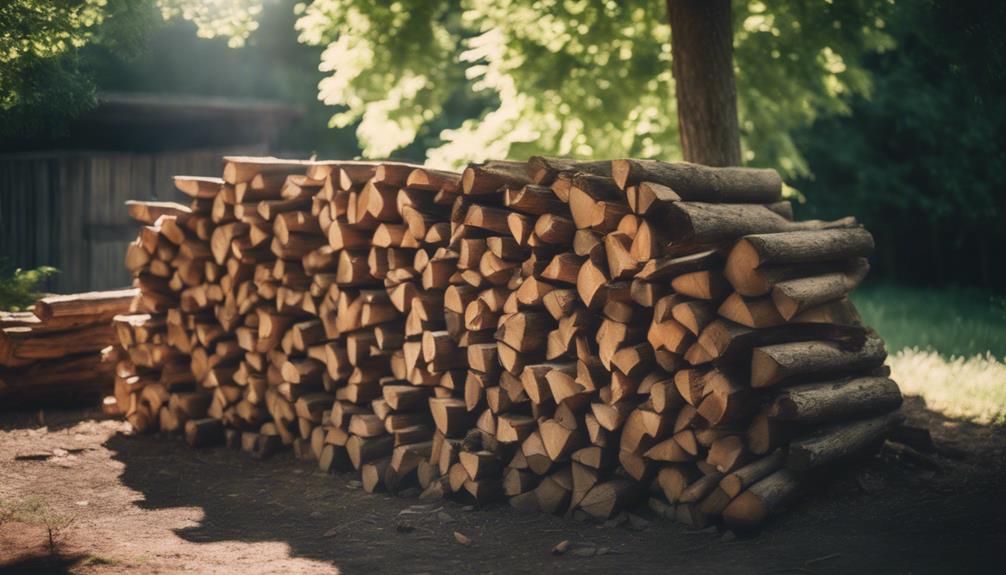
Properly storing your wood guarantees it stays dry and ready for your next pizza-making session. First, always elevate your wood two to three inches above the ground. This simple step prevents the wood from absorbing moisture, leading to high moisture content and inefficient burning.
Use wood racks for outdoor storage to keep your wood organized and dry. Cover these racks to shield the wood from rain and snow, making sure it remains dry for use. Stack your wood in crates as an additional method to avoid dampness. Crates allow air circulation around the wood, helping it stay completely dry.
You can also store some wood below the oven for convenience. This placement makes it easy to grab wood quickly while cooking. For best results, ensure any wood stored below the stove is fully dry and ready for use. After each cooking session, place any remaining wood in the oven to dry it out completely. This step is important in maintaining low moisture levels and preparing your wood for use the next time you fire up the oven.
Frequently Asked Questions
What Wood Is Best to Use in a Pizza Oven?
For your pizza oven, it would be best to use hardwood choices like maple, pecan, birch, and cherry wood. Like apple and cherry, fruitwood options add flavor. Mesquite and olive wood offer unique tastes. Avoid softwoods for best results.
Is Hickory Wood Good for a Pizza Oven?
Yes, hickory wood is great for a pizza oven. Its hickory flavor, strong smoke intensity, and excellent heat retention make it ideal. Its low moisture content, consistent burning rate, and proper seasoning process enhance the flavor profile.
What Wood Is Recommended for OONI Pizza Oven?
For your Ooni pizza oven, use kiln-dried hardwoods with low moisture content—properly seasoned woods like oak, maple, or cherry guarantee top-notch heat output and flavor profile. Store wood chunks correctly and split them for better smoke control.
Is Red Oak or White Oak Better for Pizza Ovens?
When choosing between red oak and white oak for pizza ovens, go for red oak. Its lower moisture content boosts heat efficiency, provides robust smoke flavor, guarantees longer cooking duration, and has better wood density, though it may cost more.
Conclusion
Choosing the right wood for your pizza oven is essential for achieving that perfect, authentic flavor. Stick to seasoned hardwoods like ash, maple, cherry, apple, and oak to guarantee high heat and delicious taste. Avoid softwoods and greenwoods, as they can ruin your pizza. Properly store your wood to keep it dry and ready. You’ll enjoy mouthwatering wood-fired pizzas by making smart choices every time you fire up your oven.
Explore More Articles:
How to Smoke on a Gas Grill: Easy Tips for Flavorful BBQ
Texas Twinkies 2024: Tips and Tricks for Perfectly Crispy Bites