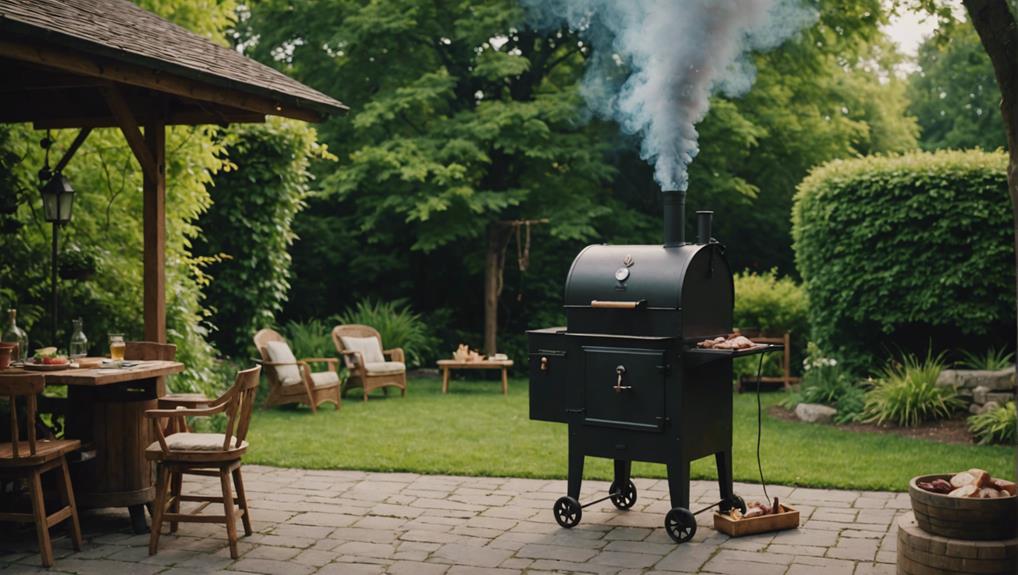
Cold smoking offers a unique way to preserve and enhance the flavors of various foods without actually cooking them. Imagine infusing your favorite meats, cheeses, or nuts with a rich, smoky aroma that elevates their taste profile.
You must choose the right equipment carefully and follow specific curing techniques to achieve the best results.
But, the process involves more than just flavoring—there are essential safety measures you must consider to prevent bacterial contamination. Have you ever wondered how to set up a DIY cold smoking setup that guarantees both deliciousness and safety?
Table of Contents
Key Takeaways
- Cold smoking enhances flavor by exposing food to smoke below 90°F without cooking it.
- Proper curing and precise temperature control are essential to prevent bacterial contamination.
- Ideal cold-smoking foods include bacon, salmon, cheese, vegetables, and nuts.
- Essential equipment includes smoke generators, electric smokers, and proper ventilation systems.
- Safety measures include using Cure #1, maintaining refrigeration, and thorough curing techniques.
What Is Cold Smoking
Cold smoking is a technique in which food is exposed to smoke below 90°F to preserve and enhance flavor. This method has been used for centuries, primarily for meat preservation.
Unlike hot smoking, cold smoking doesn’t cook the food; instead, it relies on the smoke to infuse flavor and aid in preservation. Cold smoking requires careful temperature control.
Maintaining a temperature below 90°F is crucial because it prevents the food from cooking while allowing the smoke to work its magic. Before you start cold smoking, make sure your food is properly cured.
Curing is essential as it draws out moisture, making the food less hospitable to bacteria and thus enhancing both safety and preservation. Foods like cheese, bacon, salmon, and vegetables can benefit from cold smoking.
The smoke imparts a unique flavor profile that can’t be achieved through other cooking methods. However, always be mindful of food safety. Poor temperature control or inadequate curing can lead to bacterial growth, compromising the quality and safety of the food.
Choosing the Right Equipment
You’ll need the right equipment tailored to maintain low temperatures and consistent smoke to achieve the best results in cold smoking. The cold-smoking process requires a careful selection of tools to guarantee proper temperature control and smoke distribution.
Electric smokers, charcoal grills, and dedicated cold smoke chambers are excellent options. Each type has its benefits, such as ease of use or versatility. A vital element is the smoke generator, a pellet tube, or another device designed to create continuous smoke.
Wood chunks, especially from hardwoods like cherry wood, are recommended for their slow-burning properties and enhanced flavor profiles. Avoid softwoods, as they can produce unwanted resins.
Proper ventilation is essential to prevent overly smoky conditions and ensure the smoke circulates well within the chamber. Here’s a quick comparison of equipment:
| Equipment Type | Key Features |
|---|---|
| Electric Smokers | Consistent temperature control, easy to use |
| Charcoal Grills | Versatile, it can be adapted for cold smoking |
| Smoke Generators | Consistent smoke production, various designs available |
Best Foods for Cold Smoking

Regarding cold smoking, meats like bacon, beef, pork, and fish such as salmon and trout are some of the top choices to enhance with smoky flavors. These smoked meats and fish gain a unique depth that transforms their taste profiles.
However, it’s important to acknowledge the risk levels associated with different foods. Starting with low-risk foods like cheese is a great idea for beginners. Cold-smoking cheese adds a rich, smoky flavor without the complications of bacterial contamination.
Vegetables and nuts are also excellent options. Smoked vegetables offer a delightful twist to your usual dishes, and smoked nuts become irresistible snacks. On the other hand, high-risk foods like sausage and certain fish require meticulous handling.
These items are more susceptible to bacterial contamination during cold smoking. Ensure they’re properly cured and maintained at safe temperatures throughout the process. Cold smoking is all about flavor enhancement.
By carefully selecting your foods and understanding their risk levels, you can enjoy a variety of smoky delights. Whether you’re after the robust taste of smoked meats or the subtle infusion of cheese, vegetables, and nuts, cold smoking offers endless possibilities.
Safety Measures and Risks
Ensuring the safety of your cold-smoked foods hinges on meticulous attention to detail and adherence to proper techniques. When you cold smoke meat, it’s important to use a cure, such as Cure #1, combined with salt.
These ingredients help prevent the growth of harmful bacteria, like Clostridium botulinum, which can cause severe foodborne illnesses. Precise temperature control is essential. Keeping the smoking environment between 225-180°F ensures that the meat doesn’t enter the danger zone where bacteria thrive.
Refrigeration is also necessary during and after the smoking process, especially for raw meats, to maintain safety and prevent bacterial contamination. Proper curing techniques are essential.
Removing intermuscular fat helps the curing salts penetrate the meat more effectively, ensuring thorough preservation. Curing salts contain nitrites that inhibit bacterial growth, making them indispensable for safe cold smoking. Understanding these risks and following the guidelines can prevent harmful bacteria from contaminating your food.
DIY Cold Smoking Setup
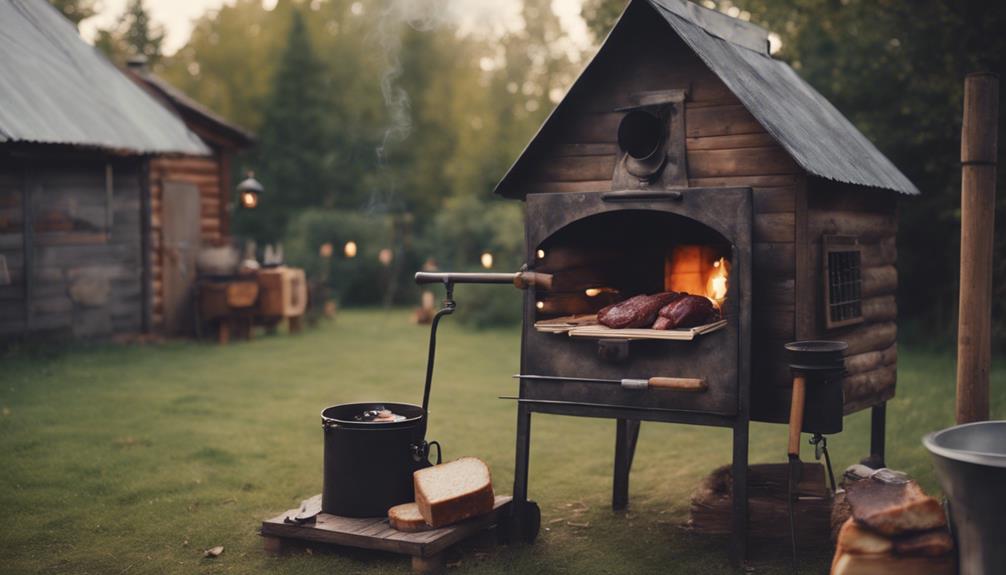
Creating your cold smoking setup at home can be both important and rewarding, allowing you to experiment with different foods. To get started, you’ll need a few basic materials: a cardboard box, aluminum foil, a rack, a hot plate, and wood chips.
The cardboard box acts as your smoking chamber. Line it with aluminum foil to protect against heat and guarantee a clean surface. Ventilation is essential in any DIY setup.
Cut a few small holes in the box to allow proper airflow and smoke distribution. This ensures that your food absorbs the smoky flavor evenly.
Temperature control is another vital aspect. Keep the temperature below 90°F to prevent cooking the food. A simple way to manage this is by using a thermometer and adjusting the hot plate’s settings accordingly.
Safety precautions can’t be overlooked. Always keep your smoking setup away from flammable materials. Monitor the smoking process closely to avoid any accidents. Using a cardboard box, while economical, requires extra vigilance.
Place your wood chips on the hot plate, and let the smoke infuse your food. With this DIY setup, you can enjoy the art of cold smoking right in your backyard.
Conclusion
To summarize, cold smoking enhances food flavor without cooking. You can cold-smoke foods, such as meats, cheese, and vegetables, by selecting the right equipment and following proper curing techniques.
Always prioritize safety to prevent bacterial contamination and guarantee proper refrigeration. You can enjoy the rich, smoky taste at home with a DIY setup. So go ahead, give cold smoking a try, and elevate your culinary skills!