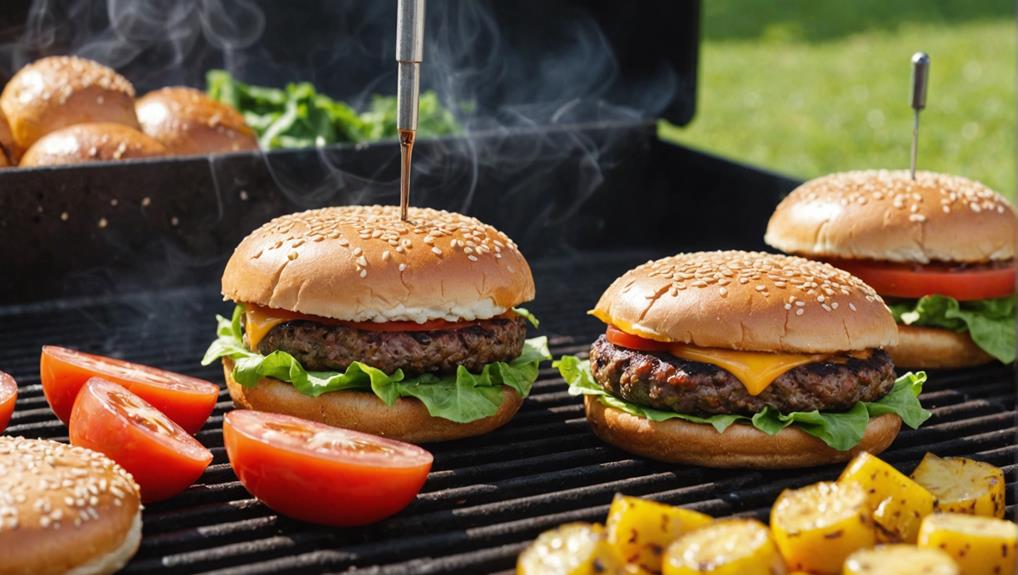
When you’re grilling a Hamburger Temperature , the temperature isn’t just about preference; it’s a matter of safety, too. You might prefer a juicy, medium-rare bite, but do you know the risks involved if the meat’s not properly cooked? Balancing flavor and safety can be tricky, and it’s more than just guessing with a spatula. Have you ever considered how a simple tool could transform your grilling game? Before your next barbecue, you might want to explore these nuances further, ensuring every bite is both delicious and safe. What’s the secret tool that could make all the difference?
Table of Contents
Key Takeaways
- Cook burgers to a safe internal temperature of 160°F to prevent foodborne illnesses.
- Use a meat thermometer to measure burger internal temperatures accurately for desired doneness.
- Rare burgers should reach an internal temperature of 125°F for a cool, red center.
- Medium burgers should be cooked to an internal temperature of 145°F for a warm, slightly pink center.
- Well-done burgers need to reach at least 160°F for a fully cooked, gray center.
Optimal Burger Cooking Temperatures
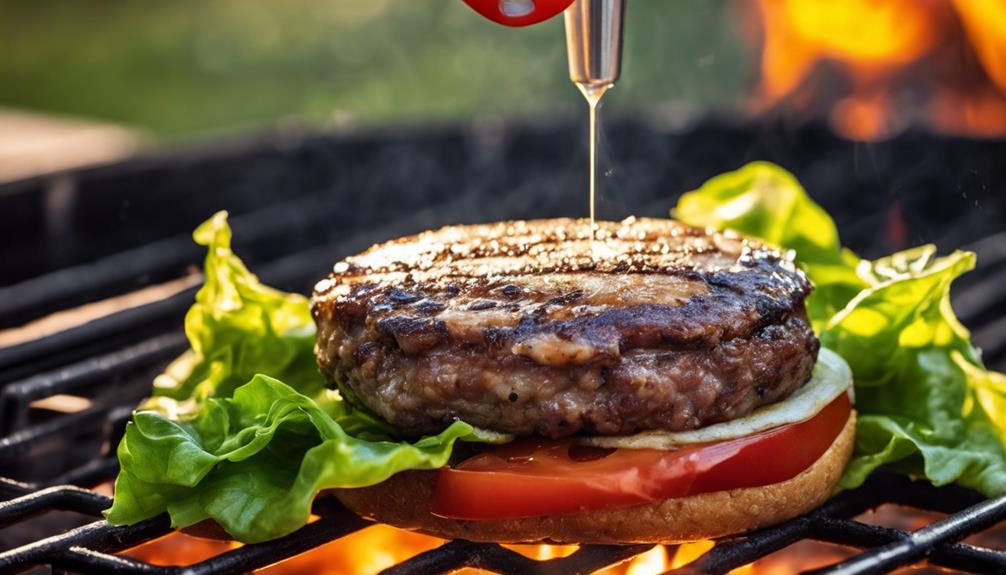
When it comes to cooking the ideal burger, understanding ideal temperatures is essential. You want to make sure your burger is cooked properly, whether it’s rare, medium rare, medium, medium well, or well done. Knowing the internal temperatures for each level of doneness is vital for achieving the perfect burger. A food thermometer is your best friend here, making sure your burger reaches the right temperature for your preferred doneness.
For a rare burger, aim for an internal temperature of 125°F. The center should be cool, red, and juicy. If you prefer medium rare, cook the burger to 135°F. This will give you a warm, pink center that’s slightly firm.
A medium burger requires a temperature of 145°F, resulting in a warm center with a slight pink tint. For medium well, cook it to 155°F. At this point, the center shows a hint of pink and gray with a firmer texture. Finally, a well-done burger should reach at least 160°F, offering a gray, fully-cooked center that’s firmer and drier.
Importance of Safe Cooking
Safety in cooking isn’t just about taste—it’s about protecting yourself and others from harmful bacteria. When cooking burgers, adhering to food safety guidelines is crucial to guarantee your ground meat is safe for consumption. To prevent foodborne illnesses, you must cook ground beef to a safe minimum internal temperature of 160 degrees Fahrenheit. This temperature is essential as it effectively eliminates harmful bacteria, like E. coli and Salmonella, that can lead to serious health issues.
Burger Temperature isn’t merely a preference; it’s a crucial safety measure. A properly cooked burger, reaching the safe minimum internal temperature, can prevent bacterial contamination and ensure a delightful eating experience. Cooking burgers to the recommended temperature is especially important for those with compromised immune systems, who are more vulnerable to foodborne illnesses.
The internal temperature of your burgers is the best indicator of doneness and safety. You can’t rely on color or texture alone to determine if your burger is ready to eat. By following food safety guidelines, you guarantee your burgers aren’t only delicious but also safe, providing peace of mind for you and your guests.
Tools for Measuring Temperature

To safeguard your burgers reach that safe minimum internal temperature of 160 degrees Fahrenheit, you’ll need the right tools. Meat thermometers are your best allies in achieving this. The Thermapen® ONE provides accurate readings quickly, confirming your burgers are perfectly cooked every time. With its rapid response time, you won’t have to wait long to verify that your meat is safe to eat.
For those who enjoy multitasking or need to step away from the grill, the Smoke X® Long-range Remote Thermometer is a game-changer. It offers wireless monitoring with multiple probes, allowing you to manage various temperature measurements from a distance. This tool gives you the freedom to enjoy more of the cooking process without compromising safety.
If you prefer precise control with modern convenience, the ThermaQ® Blue Multi-channel thermometer is your go-to. Its Bluetooth connectivity lets you monitor cooking temperature from your smartphone, providing flexibility and ease of use.
For high-temperature cooking scenarios, the High Temp Smokehouse Penetration Probe – Stainless Armor is indispensable. It delivers accurate penetration readings, ensuring your burgers are cooked thoroughly. Using these tools confirms your burgers are always safe, delicious, and cooked to perfection.
Cooking Techniques for Burgers
Grilling the perfect burger isn’t just about taste; it’s about mastering cooking techniques that guarantee both flavor and safety. When cooking burgers, focusing on both the internal temperature and the cooking times is vital to ensure food safety and achieve your desired doneness. Using a meat thermometer is important. It helps you accurately measure the internal temperature of ground beef, making sure all foodborne bacteria are eliminated. For instance, a well-done burger should reach 160°F.
Refrigeration plays a significant role in preparing juicy burgers. Keeping your meat refrigerated before grilling maintains the integrity of fats and juices, contributing to a flavorful outcome. Once you’re ready to cook, aim for the right doneness level:
- Rare: Reach an internal temperature of 125°F.
- Medium: Aim for 145°F for a pink center.
- Well-Done: Achieve 160°F for full safety.
These cooking techniques not only help in creating delicious burgers but also meet important food safety guidelines. Proper handling and precise cooking times ensure that your burgers are free from harmful bacteria, providing a safe and tasty experience for everyone. Remember, a perfectly cooked burger is both juicy and safe to eat!
Enhancing Burger Flavor and Texture

A juicy, flavorful burger starts with choosing the right ingredients and techniques to enhance both taste and texture. Begin by keeping the meat cold before grilling burgers, as this helps retain fat integrity, ensuring juiciness. When you’re ready to cook, pay attention to the internal temperature, which directly affects doneness levels and texture variations. You can explore different flavor profiles by experimenting with various doneness levels, from rare to well-done.
Incorporate unique burger sauces to elevate the taste and create a memorable dining experience. Preparation techniques such as gently handling the meat and forming uniform patties contribute to even cooking and improve texture. Use reliable cooking techniques to achieve the desired doneness while maintaining food safety standards, ensuring customer satisfaction.
Grilling burgers correctly means understanding how each element impacts the final product. By controlling the temperature and timing, you can perfect the burger’s texture and juiciness.
Don’t overlook the importance of choosing the right burger sauces, which can complement and enhance the natural flavors of the meat. With these strategies, you’ll consistently craft delicious burgers that leave a lasting impression.
Frequently Asked Questions
Are Burgers Done at 145?
You confirm that the burgers are done by using a meat thermometer to check that the internal temperature reaches 145°F. This cooking technique balances food safety, flavor development, and burger doneness. Remember grilling tips and the resting period for juicy burgers.
Are Burgers Safe at 150 Degrees?
Yes, at 150 degrees, burgers are safe if cooked to medium-well, unlike rare burgers. Follow temperature guidelines for burger doneness, ensuring meat safety and minimizing pathogen risk. Use thermometer accuracy for cooking safety to prevent foodborne illness with proper temperature control.
Can You Eat a Burger at 135?
You can eat a burger at 135°F but consider food safety and bacteria risks. Use a meat thermometer to check doneness. Your flavor preferences and burger texture influence this choice, but health guidelines suggest higher grill temperatures for safety.
What Temperature for Medium Well Hamburger?
To achieve a medium-well burger, guarantee your ground beef reaches an internal temperature of 150-155°F. Use a meat thermometer, monitor cooking time, and aim for a juicy texture, pink center, charred exterior, grill marks, and balanced seasoning blend.
Conclusion
To guarantee a delicious and safe burger, always prioritize the right cooking temperature. Use a meat thermometer to check that your burger reaches at least 160°F, eliminating harmful bacteria. By mastering cooking techniques, you’ll achieve the perfect texture and flavor, from rare to well-done. Don’t forget, a well-cooked burger not only tantalizes your taste buds but also keeps you healthy. So, trust your tools, follow guidelines, and enjoy a perfectly cooked hamburger every time.