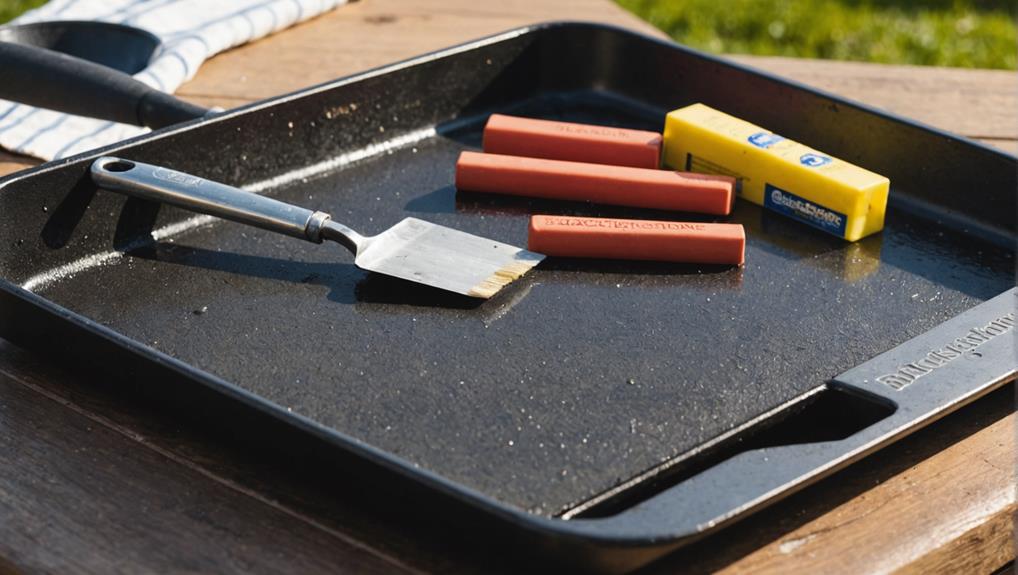
When you’ve finished a delicious meal on your Blackstone griddle, cleaning it properly is important to maintain its performance and longevity. You might wonder, what’s the best way to tackle this task without causing damage? You’ll need specific tools and techniques to guarantee your griddle remains in top condition, ready for your next culinary venture. From scraping off stubborn food residues to applying the right amount of oil for seasoning, each step plays a critical role. Have you thought about the common mistakes you should avoid during this process? Let’s explore these essential tips and tricks.
Table of Contents
Key Takeaways
- Use a metal scraper to remove food residue and debris from the griddle surface.
- Steam clean by applying water from a plastic squeeze bottle and wiping with paper towels.
- Avoid soap and water; rely on scraping and steaming for effective cleaning.
- After cleaning, apply a thin layer of oil to maintain non-stick seasoning.
- Regularly check for rust and address it with a vinegar solution or baking soda paste.
Importance of Cleaning
Cleaning your Blackstone griddle is necessary for maintaining its performance and longevity. When you neglect to clean it properly, the non-stick surface can suffer, leading to less efficient cooking and frustrating clean-up sessions. By regularly cleaning your Blackstone griddle, you not only guarantee it remains in top shape, but you also make your cooking experience more enjoyable. A clean surface prevents food from sticking, so you spend less time scrubbing and more time savoring your culinary creations.
Regular cleaning is your best strategy for preventing rust and prolonging your griddle’s lifespan. Each time you cook, remnants can build up, potentially damaging the slick surface that makes cooking a breeze. Immediate cleaning after each use is essential—it’s easier to wipe away fresh grease and debris than to battle tough, stubborn build-up later.
By taking a few moments to clean your Blackstone griddle after each grilling session, you save time, effort, and money in the long run.
Moreover, maintaining a clean griddle ensures you’re ready for the next cooking adventure. A well-maintained non-stick surface guarantees a smooth, hassle-free experience, allowing you to focus on crafting delicious meals rather than tedious cleaning.
Essential Cleaning Supplies
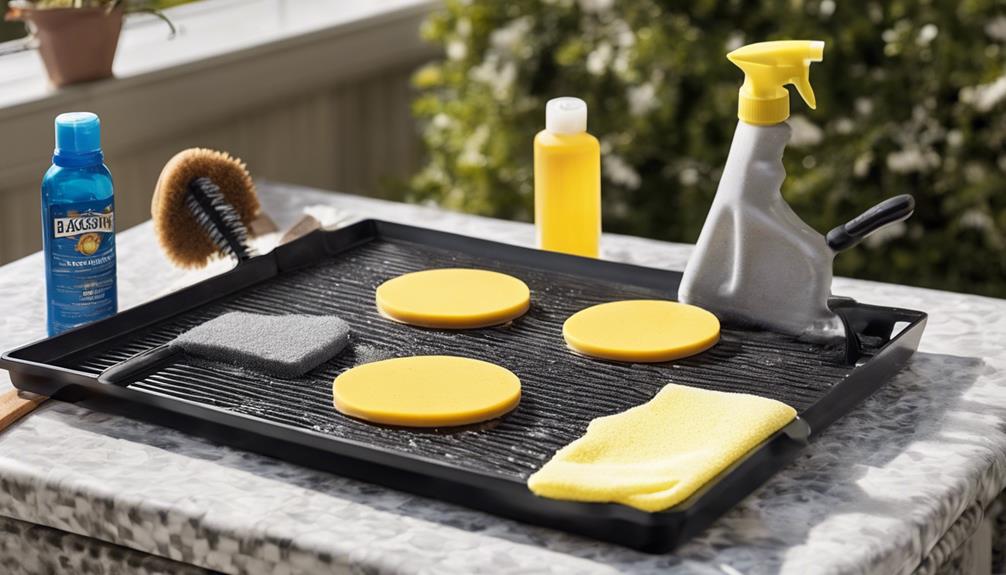
To keep your Blackstone griddle in pristine condition, you’ll need the right cleaning supplies. Having essential tools on hand is important for maintaining the non-stick surface and guaranteeing your griddle stays in top shape. Here’s a list of must-have cleaning supplies for your Blackstone griddles:
- Metal Spatula: This tool isn’t just for flipping burgers. A metal spatula is necessary for gently scraping away food residue without causing damage to the surface. It helps maintain that slick, non-stick quality you love.
- Heavy-Duty Scraper: When the going gets tough, a heavy-duty scraper is your best friend. It’s designed to tackle stubborn, cooked-on grime, making the cleaning process efficient and saving you both time and effort.
- Plastic Squeeze Bottle: Fill a plastic squeeze bottle with water or your favorite cleaning solution for easy application during the cleaning process. It helps in loosening debris and rinsing away grease effortlessly.
Don’t forget Bacon-Up Bacon Grease! It can be used to season your griddle after cleaning, preserving its surface for future cooking. Investing in these quality tools and supplies will guarantee your Blackstone griddle remains a reliable companion for delicious cooking experiences.
Step-by-Step Cleaning Guide
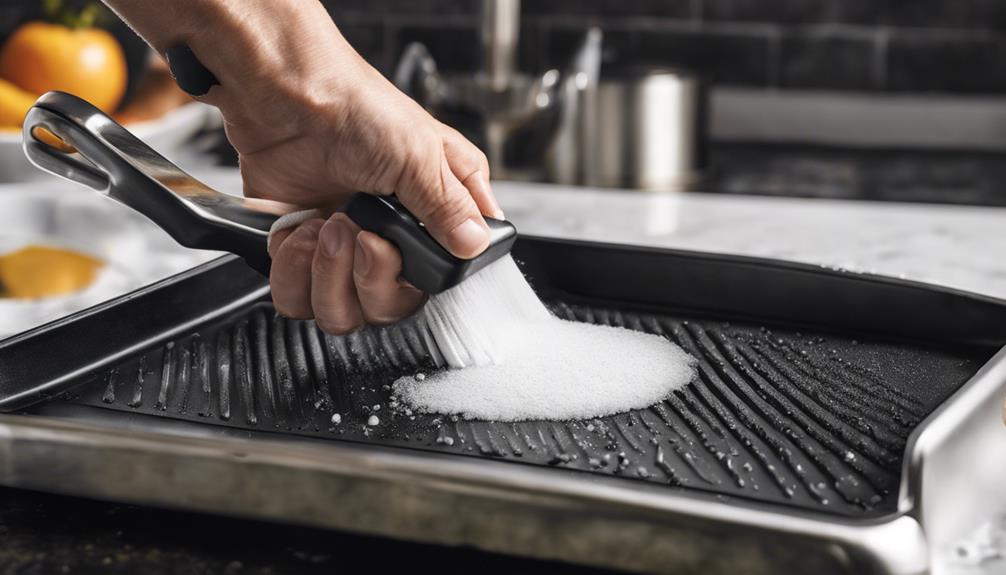
To maintain your Blackstone griddle stays in top shape, you’ll need a few essential tools like a heavy-duty scraper and a plastic squirt bottle.
Start by scraping off food scraps and use the squirt bottle to create steam for a thorough clean.
After drying it with heavy-duty paper towels, season the surface with Bacon-Up Bacon Grease to sustain its non-stick properties and prevent future sticking.
Essential Cleaning Tools
When it comes to keeping your Blackstone griddle in top condition, a few essential tools make the cleaning process straightforward and effective. To start, you’ll need a heavy-duty scraper to remove food scraps and residue, ensuring the griddle’s non-stick surface remains intact. A sturdy spatula will also come in handy for flipping and maneuvering stuck-on bits without damaging the surface. Additionally, have plenty of paper towels on hand to wipe away debris and absorb excess grease.
Here’s a quick list of what you’ll need:
- Scraper and Spatula: Use these to scrape off and move any leftover food particles effectively.
- Paper Towels: Essential for soaking up grease and keeping the surface clean.
- Plastic Squeeze Bottle: Use this for steam cleaning, making it easier to tackle stubborn grime.
After cleaning, don’t forget to dry your griddle thoroughly with paper towels to prevent rust. To maintain the non-stick properties, season the griddle with Bacon-Up Bacon Grease, which not only protects but also enhances flavor. By using these tools and methods, your Blackstone griddle will stay in excellent shape, ready for your next cooking adventure.
Effective Cleaning Techniques
Maintaining your Blackstone griddle is necessary to guarantee it delivers exceptional cooking results time after time. Start by using a metal scraper to remove any residue and food scraps from the griddle surface. This will help prevent buildup that can impact your cooking.
Once you’ve scraped off the majority, a metal spatula can assist with any finer debris. Next, use a plastic squeeze bottle filled with water to steam clean the griddle. Simply squirt the water onto the hot griddle surface, allowing the steam to loosen any remaining grime.
After steam cleaning, wipe down the griddle with heavy-duty paper towels to soak up excess moisture and grime. This step ensures that the griddle surface is clean and dry, which is vital to prevent rust.
Once fully dried, apply a thin layer of oil onto the griddle. Consider using Bacon-Up Bacon Grease for a natural, non-stick seasoning layer. Spread it evenly across the surface to maintain its quality and enhance its non-stick properties. Regular cleaning and seasoning like this not only keep your Blackstone in top condition but also guarantee your food doesn’t stick, making every cooking experience a pleasure.
Post-Cleaning Maintenance
A well-maintained Blackstone griddle guarantees durability and excellent cooking performance. After cleaning your griddle, effective post-cleaning maintenance is essential to keep it in prime shape. Here’s a simple guide to help you maintain your griddle’s quality:
- Apply a Layer of Oil: Once your griddle is clean and dry, apply a thin layer of oil to create a protective barrier. This prevents rust and keeps the surface non-stick for your next cooking session. Use an oil with a high smoke point, like canola or vegetable oil, for optimal results.
- Regular Cooking: Regular use of your griddle helps maintain its seasoning and prevents rust from forming. Each time you cook, you’re reinforcing the protective layer of oil, keeping your griddle in top-notch condition.
- Use a Canvas Cover: Protect your griddle from the elements by using a canvas cover when it’s not in use. This shields it from moisture and environmental factors that could cause rust or wear.
Griddle Seasoning Process
Seasoning your Blackstone griddle is necessary to create a natural, non-stick surface that boosts cooking performance and flavor. To season your griddle, start by applying a thin layer of oil over the entire surface. This vital step helps build a protective coating that not only enhances cooking but also prevents food from sticking. Proper seasoning is akin to seasoning cast-iron pans, where repeated heating and cooling build up a slick, durable layer.
After cleaning your griddle, make sure it’s completely dry. Apply a small amount of oil—vegetable or canola works well—and spread it evenly over the surface. Heat the griddle on high until the oil begins to smoke, then turn it off and let it cool. Repeat this process several times to guarantee a robust coating.
Here’s a quick guide to the seasoning process:
| Step | Action | Purpose |
|---|---|---|
| 1. Clean | Dry griddle completely | Prepares surface |
| 2. Oil | Apply a thin layer of oil | Prevents sticking |
| 3. Heat | Heat until the oil smokes | Builds protective coating |
| 4. Cool | Allow to cool | Sets the non-stick layer |
| 5. Repeat | Repeat steps 2-4 | Strengthens seasoning |
Rust Removal Techniques

To tackle rust on your Blackstone griddle, start by applying a vinegar solution or a baking soda paste and gently scrubbing the affected areas.
Regularly inspect your griddle and store it in a dry place to prevent rust from forming.
Keep your griddle’s surface protected by re-seasoning it periodically, ensuring it stays rust-free and ready for use.
Effective Rust Removal Methods
Sometimes, rust can sneak up on your Blackstone griddle, but don’t worry—it’s not the end of the world. You can easily tackle this issue and restore your griddle to its pristine condition. Here’s how you can effectively remove rust:
- Vinegar Solution: First, use a vinegar solution. Combine equal parts of vinegar and water and apply it to the rusty spots. The acidity in vinegar helps break down the rust. Let it sit for a few minutes before scrubbing with a grill brush.
- Baking Soda Paste: For stubborn rust, a paste made from baking soda and water works wonders. Apply the paste to the affected areas and let it sit for about 20 minutes. This mixture acts as a gentle abrasive, making it easier to remove rust when you scrub it with a soft-bristled brush.
- Rinse and Dry: After you’ve removed the rust, thoroughly rinse the griddle with water and dry it completely to prevent further oxidation. Finally, don’t forget to season your griddle by applying a thin layer of oil. This creates a protective barrier, keeping rust at bay and ensuring your griddle stays in top shape.
Preventive Measures for Rust
Keeping your Blackstone griddle in prime condition starts with a few preventive measures that can ward off rust effectively.
First, think of your griddle as a cast iron skillet that needs regular care. Regularly re-season your griddle to form a protective barrier against moisture and rust. This simple habit guarantees your griddle remains in top shape, like a well-loved cast iron pan.
Investing in a good-quality griddle cover is another essential step. A cover will shield your Blackstone from harsh weather elements, notably reducing the risk of rust. Always cover your griddle when it’s not in use, especially if it’s stored outside. It’s a small step that can make a significant difference.
Equally significant is where you store your griddle. Please keep it in a dry place to prevent rust formation. Moisture is rust’s best friend, so keeping your griddle dry is key.
Regularly check for any signs of rust. Spotting it early means you can address the issue quickly, preventing further damage.
Tools for Rust Cleaning
Removing rust from your Blackstone griddle is straightforward with the right tools and techniques. Start by gathering a few essentials to tackle those pesky rust spots. A scraper to remove rust is your first line of defense. Use it to gently scrape away loose rust and debris, being careful not to damage the surface of your griddle.
Next, you’ll want a vinegar solution. Mixing equal parts of vinegar and water creates an effective rust-busting agent. Apply this solution to the rust spots and let it sit for a few minutes to loosen up the rust. Afterward, scrub the area with a non-abrasive pad to reveal a cleaner surface.
For more stubborn rust spots, a paste of baking soda and water works wonders. Here’s a quick guide to help:
- Scraper to Remove: Use a sturdy scraper to lift off any flaking rust.
- Vinegar Solution: Apply the vinegar solution to dissolve rust.
- Baking Soda Paste: Mix baking soda with water for tough spots.
Regularly check your griddle for rust formation and store it in a dry place with a quality cover to prevent future issues.
Proper Griddle Storage
To maintain your Blackstone griddle stays in top condition, store it in a cool, dry place. This helps prevent rust and other damage caused by moisture exposure. Moisture is a griddle’s worst enemy, and keeping it in a dry environment protects its quality and longevity. You’ll want to avoid areas prone to humidity or temperature fluctuations, as these can lead to unwanted wear and tear.
Investing in a heavy-duty cover is another essential step in protecting your griddle. A good cover acts as a barrier against moisture and external elements, ensuring your griddle remains in prime shape.
Always make sure the cover fits snugly to keep out dust and dampness effectively. The right storage and protection mean your griddle will be ready for immediate use whenever you need it.
Pre-Cooking Preparations

Now that your Blackstone griddle is stored safely, let’s get it ready for cooking. The first step is to preheat your griddle. This guarantees even heating and best results, giving you that perfect sear on your food. Preheating also helps to maintain the non-stick properties that make your griddle a joy to use.
Before you start cooking, make sure your griddle is in top-notch shape by following these steps:
- Clean after each use: Use non-abrasive cleaning tools to scrub off any remaining food particles gently. This keeps the surface smooth and prevents buildup, preserving your griddle’s quality.
- Store in a dry place: After cleaning, make sure the griddle is completely dry before storing it. This prevents rust and keeps it in excellent condition for your next cooking session.
- Re-season periodically: Over time, the seasoning on your griddle can wear off. Re-seasoning not only protects the surface but also enhances performance, ensuring your meals are always tasty.
Avoiding Common Mistakes
When cleaning your Blackstone griddle, don’t use soap and water, as they can strip away the seasoning. Instead, focus on scraping off food particles with a griddle scraper while the surface is still warm. Avoid abrasive tools like steel wool, which can damage the surface and lead to rust.
Skip Soap and Water
Instead of turning to soap and water, which might appear as the go-to cleaning solution, understanding how these can harm your Blackstone griddle is vital. Soap can strip away the carefully built-up seasoning, leading to rust and a compromised non-stick surface. To clean your Blackstone effectively and prolong its life, skip soap and water entirely. Instead, opt for a griddle scraper; it’s your best friend for removing stubborn food bits without harming the seasoning. By avoiding common mistakes, such as using soap and water, you maintain the seasoning preservation that’s essential for top-notch cooking performance.
Here’s how you can sustain your Blackstone without soap:
- Utilize a Griddle Scraper: Eliminate food residue by gently scraping off particles. This helps keep the seasoning intact.
- Steam Clean with Water: Pour a small amount of water onto the hot griddle and use a cloth to steam away grease and grime.
- Season Regularly: After each cleaning, apply a thin layer of oil to maintain the non-stick surface.
Avoid Abrasive Tools
Many people unknowingly make the mistake of reaching for abrasive tools when cleaning their Blackstone griddle, but this can be detrimental to its non-stick surface. Using metal utensils or harsh scrubbers might seem like a quick fix for stubborn residue, but these abrasive tools can scratch and strip away the griddle’s seasoning. This not only affects the non-stick coating but also diminishes the griddle’s performance over time.
Instead, opt for soft cleaning tools that are gentle yet effective. Sponges and nylon brushes are excellent choices to prevent damage while still thoroughly cleaning your griddle. These tools are designed to protect the non-stick coating, ensuring your griddle remains in peak condition.
Pro Tips for Longevity

Maintaining the longevity of your Blackstone griddle requires some simple but essential maintenance habits. First, remember that the seasoning on your griddle is vital. It acts as a protective layer, preventing rust and providing a non-stick surface. Avoid using harsh cleaning products or soap, as these can strip away this important layer. Instead, rely on gentle cleaning methods to preserve the seasoning.
Before you start cooking, always preheat your griddle. This step is crucial for maintaining the non-stick surface and enhancing the flavors of your food. Preheating ensures even cooking and helps keep the seasoning intact, making cleanup easier afterward.
To further safeguard your Blackstone griddle, follow these steps:
- Regularly Oil and Season: Apply a thin layer of oil after each use to keep the griddle seasoned and protected from rust.
- Store Properly: Find a secure spot to store your griddle, protecting it from scratches and potential damage.
- Use Proper Cleaning Techniques: Stick to recommended cleaning practices to maintain the quality and extend the life of your griddle.
Maintaining Griddle Performance
To maintain your Blackstone griddle performing at its best, maintaining a routine of regular cleaning and seasoning is important. Start by preheating your griddle before every cooking session. This step not only helps to uphold the non-stick surface but also guarantees even cooking.
Once preheated, apply a thin layer of oil, like Bacon-Up Bacon Grease, to enhance the griddle’s natural non-stick properties and improve the flavor of your dishes.
After each use, clean the griddle carefully to prevent food residues from building up. Use a spatula to scrape off debris, but avoid abrasive materials that can scratch the seasoned surface. Gentle cleaning preserves the dark, semi-glossy finish necessary for optimal cooking performance.
When it comes to seasoning, make it a regular habit. A well-seasoned griddle repels rust and provides a consistently smooth, non-stick surface.
Store your griddle in a cool, dry place, and cover it with a heavy-duty cover to protect it from the elements and potential damage.
Frequently Asked Questions
What Is the Best Way to Clean a Blackstone Griddle?
Use cleaning supplies like a scraper and squirt bottle for grease removal. Stick to a cleaning schedule and follow maintenance tips. Dry thoroughly and apply protective measures, like seasoning and covering, to guarantee your griddle stays in top condition.
Do I Need to Clean My Blackstone After Every Use?
Yes, it would be best if you cleaned your Blackstone after every use. Regular cleaning frequency guarantees post-cooking care, prevents buildup, and aids grease removal. Following maintenance tips keeps your griddle in top shape for hassle-free cooking each time.
How to Clean Rust off a Blackstone Griddle?
You can remove rust by applying a vinegar solution or lemon juice, then use a baking soda scrub. Gently scrub with steel wool. If needed, try the sandpaper method for stubborn areas. Repeat until the rust’s gone.
Can You Use Dawn Dish Soap on a Blackstone Griddle?
Don’t use Dawn dish soap on a Blackstone griddle. Instead, apply proper cleaning techniques with alternative cleaning solutions like hot water and a scraper. This prevents grease buildup, maintains the griddle surface, and removes stubborn stains effectively.
Conclusion
Keeping your Blackstone griddle clean and well-maintained is essential for excellent cooking experiences. By regularly scraping off residue, steaming it with water, and wiping it down, you’ll guarantee it stays in great shape. Don’t forget to season it with a thin layer of oil to maintain its non-stick surface. Avoid common cleaning mistakes and follow these expert tips to extend your griddle’s lifespan. With proper care, your griddle will deliver delicious meals for years to come.