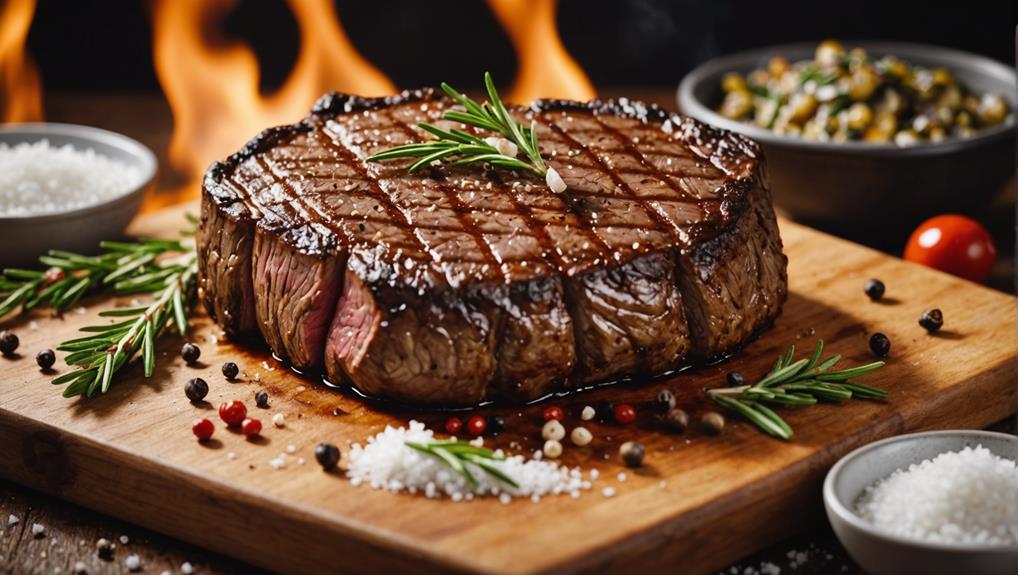
Understanding what each cut brings is crucial when choosing between a New York Strip and a Ribeye. The New York Strip is known for its leaner profile and firmer texture, making it a solid option for those prioritizing balance in tenderness and flavor.
Conversely, the Ribeye’s higher fat content and abundant marbling offer a richer, more indulgent experience. Both cuts have unique characteristics, but which truly aligns with your taste buds? Let’s explore the nuances that set these two steakhouse favorites apart.
Table of Contents
Key Takeaways
- Ribeye is richer and more tender with higher fat content and marbling, offering a buttery texture.
- New York Strip is leaner and firmer with a thick fat band, providing a balanced mix of tenderness and flavor.
- Ribeye is typically more expensive and less available, while the New York Strip is more budget-friendly and consistently found.
- Both cuts benefit from high-heat cooking methods, with Ribeye ideal for grilling and New York Strip suitable for hot and fast cooking.
- Ribeye contains more calories and beneficial fats, whereas the New York Strip offers higher protein and a leaner profile.
Understanding the New York Strip

When you bite into a New York strip steak, you savor a cut known for its tenderness and rich flavor. This steak comes from the short loin area of the cow, which contributes to its excellent taste and texture. In the debate of the New York Strip vs. Ribeye, the New York Strip stands out with its distinctive characteristics.
A New York strip steak features a thick band of inedible fat running along one side. While you can’t eat this fat directly, it adds to the steak’s juiciness and enhances its flavor profile. Unlike the ribeye, which has more marbling throughout, the New York strip offers a balance of lean meat with just enough marbling to keep it tender.
When considering fat content, the New York strip has less internal fat than the rib eye, making it a leaner choice. This difference influences your cooking method; a New York strip steak benefits from high-heat methods like grilling or pan-searing, which can develop a beautiful crust while keeping the inside juicy.
Understanding the difference between these cuts helps you appreciate each’s unique qualities. The New York strip, known as the Kansas City strip, remains a favorite among steak lovers for its robust flavor and satisfying texture.
Understanding Ribeye
Diving into the world of ribeye steaks, you’ll find a cut celebrated for its rich marbling and exceptional flavor. This steak comes from the rib primal section of the cow, specifically from the longissimus dorsi muscle. The marbling in a ribeye steak sets it apart, infusing each bite with a buttery texture and profound tenderness.
When you think of a ribeye steak, imagine a flavorful piece of meat that almost melts in your mouth. The abundant marbling guarantees the steak stays juicy and rich, making it a standout choice for steak lovers. It’s not just any cut; other names like beauty steak, Delmonico steak, or cowboy cut often refer to it.
If you want an even more luxurious experience, try an American Wagyu Ribeye. This premium variety takes the typical ribeye experience up a notch, offering even more intense marbling and unparalleled tenderness. It truly reflects what the cow’s rib primal can offer.
Main Differences
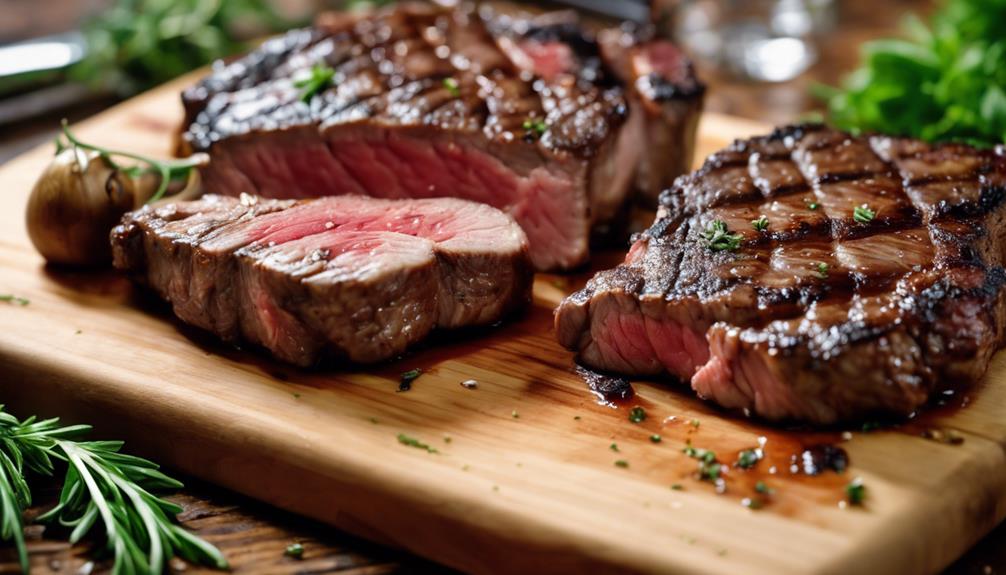
As you evaluate the qualities of Ribeye against the New York Strip, it’s clear that each offers a unique steak experience driven by its distinct textures and flavors. The primary differences between these cuts aren’t the marbling and overall texture.
Ribeye boasts a higher fat content and extensive marbling, which makes it a richer and more tender choice. Conversely, the New York Strip is leaner, with a thick band of inedible fat along one side, giving it a firmer texture. When comparing New York Strip vs Ribeye, here are some key points to take into account:
- Fat Content: Ribeye has more fat, contributing to its richer flavor and tenderness.
- Marbling: The marbling in Ribeye leads to a juicier bite, while the New York Strip is leaner.
- Texture: Ribeye’s marbling produces a softer texture, whereas the New York Strip offers a firmer, chewier experience.
Ribeye is typically cut thicker than the New York Strip, providing a different eating experience. While both steaks are tender, the Ribeye’s higher fat content makes it slightly more expensive and richer in flavor, whereas the New York Strip remains a leaner, firmer option.
Tenderness Comparison
The New York Strip and Ribeye are celebrated for their tenderness, originating in the longissimus dorsi muscle. When making a tenderness comparison, the Ribeye generally comes out on top. This is largely due to its higher marbling content, which contributes to its exceptional tenderness and rich flavor profile.
Though a leaner cut, the New York Strip still offers a tender bite thanks to being sourced from the same less-used muscle groups. It doesn’t quite melt in your mouth like a Ribeye but provides a satisfying mix of tenderness and flavor that’s hard to beat.
| Aspect | New York Strip | Ribeye |
|---|---|---|
| Tenderness | Tender | Exceptionally tender |
| Marbling Content | Moderate | High |
| Flavor Profile | Rich | Rich and juicy |
| Muscle Groups | Less used muscles | Less used muscles |
The Ribeye’stenderness is often praised for its melt-in-the-mouth quality, making it a favorite for steak lovers who prioritize texture. On the other hand, the New York Strip appeals to those who prefer a leaner cut without sacrificing too much tenderness and flavor.
Fat Content Analysis

When comparing fat content, ribeye steaks have more marbling, producing a juicier, richer taste. On the other hand, New York strip steaks are leaner and have a thick band of fat on one side. These differences can guide you in selecting the cut that aligns with your taste preferences and health considerations.
Marbling Differences
Ribeye has much more marbling than the New York strip, making it the juicier and more flavorful choice. The marbling differences between these two cuts are substantial. Ribeye’s intramuscular fat is distributed throughout the meat, giving it a rich texture. This highly marbled cut from an underused muscle group close to the neck guarantees an indulgent eating experience.
On the other hand, the New York strip has less marbling and a thicker band of external fat along the edge, resulting in a leaner option. Ribeye is known for its tenderness and richness, largely due to the amount of marbling it has. You get a steak with exceptional marbling and flavor when you choose a USDA Prime ribeye. The New York strip, while still flavorful, offers a different experience with its leaner profile.
- Ribeye’s marbling: Intramuscular fat throughout the meat
- New York strip’s fat: Thicker external band, less marbling
- Flavor impact: Ribeye’s marbling makes it richer and juicier
Understanding these marbling differences can help you decide which cut best suits your taste and cooking preferences.
Health Considerations
While the marbling in Ribeye contributes to its rich flavor, weighing the health implications of its higher fat content is important. When comparing the New York Strip vs Ribeye, you’ll find that the Ribeye’s marbling gives it a richer flavor profile and a higher fat content. Depending on your dietary preferences and health goals, this can be a double-edged sword.
If you aim for a leaner cut, the New York Strip is the way to go. It offers a protein-rich option with less fat, making it ideal for a balanced diet. This leaner cut aligns better with heart-healthy eating habits, especially if you monitor your fat intake. However, the fat content in Ribeye isn’t all bad.
The marbling contains monounsaturated fats, which can be part of a heart-healthy diet. These fats are healthier than saturated fats and can contribute to overall heart health when consumed in moderation.
Ultimately, your choice between New York Strip and Ribeye should consider your dietary preferences and health goals. If you prioritize a richer flavor and can afford the higher fat content, Ribeye is a great choice. But if you’re looking for a leaner, protein-rich option, the New York Strip is your best bet.
Cost Comparison
When comparing the cost of the New York strip and Ribeye, you’ll notice that Ribeye generally carries a higher price per pound due to its rich marbling. Market availability also plays a role, as demand for each cut can shift prices. Consider how much you’re willing to spend based on the flavor and texture you prefer.
Price Per Pound
On average, boneless ribeye steaks cost between $15 and $25 per pound, whereas New York strip steaks typically range from $10 to $20 per pound. Several factors influence the price per pound. Boneless ribeye steak, known for its rich marbling and tenderness, tends to be pricier than New York strip steak.
However, both cuts vary in price based on USDA grading, brand, and origin. Bone-in ribeye steaks, often favored for their enhanced flavor, can be even more expensive, typically ranging from $18 to $30 per pound. Meanwhile, high-quality USDA Prime ribeye steaks can exceed $30 per pound, reflecting their superior marbling and tenderness.
On the other hand, Angus-bred New York strip steaks usually fall between $15 to $25 per pound, offering a high-quality option at a relatively lower cost compared to premium ribeye cuts. When considering cost comparison, keep these factors in mind:
- Marbling: Higher marbling often correlates with higher prices.
- USDA Grading: Prime cuts are more expensive than Choice or Select.
- Bone-in vs. Boneless: Bone-in cuts generally cost more.
Understanding these nuances helps you make an informed choice based on your budget and preferences.
Market Availability
Considering the current market trends, ribeye steaks often command higher prices and may be less readily available than New York strip steaks. The higher fat content and superior marbling of ribeye steaks contribute to their elevated pricing. New York strip steaks are generally the way to go if you want a more budget-friendly option.
Several factors influence the market availability and pricing of both cuts. The aging process, whether dry or wet, can affect the cost and flavor profile of the steaks. Additionally, the breed of cattle plays a significant role in determining the quality and price; for instance, premium breeds like Angus or Wagyu will naturally cost more.
Demand also impacts availability. Ribeye, especially the bone-in Ribeye, tends to be a favorite among steak enthusiasts, leading to higher prices and sometimes limited availability. On the other hand, New York strip steaks are more consistently found in stores and restaurants, making them a reliable choice when shopping on a budget.
Cooking Techniques

Mastering the art of cooking New York strip involves utilizing high-heat techniques like searing in a hot cast-iron pan or grilling. When comparing the New York Strip vs Ribeye, both steaks benefit greatly from these methods. For a grilled New York Strip, sear each side quickly over high heat to lock in juices and create an irresistible crust.
With its abundant marbling, the Ribeyethrives under these hot and fast conditions, ensuring each bite is flavorful. To elevate your steak game, consider the reverse sear method. This technique involves cooking the steak slowly at a low temperature first, then finishing it with a high-heat sear. Both the New York Strip and Ribeye can achieve perfection this way. Benefits of the reverse sear method:
- Even Cooking: Achieves a consistent temperature throughout.
- Enhanced Flavor: Develops a rich, caramelized crust.
- Juiciness: Locks in moisture for a tender bite.
Nutritional Comparison
While perfecting your cooking techniques, it’s also essential to consider the nutritional differences between the New York strip and Ribeye. In the New York Strip vs. Ribeye debate, you’ll find that the New York strip is leaner and higher in protein, making it a great option if you’re focusing on muscle-building or following a lower-fat diet.
On the other hand, Ribeye contains more fat and marbling, which enhances its flavor and includes heart-healthy monounsaturated fats. Both cuts offer essential nutrients, including vitamins and minerals that contribute to overall health. However, your choice should align with your dietary preferences and health goals.
The New York strip might be your best bet if you aim for a lower calorie intake and higher protein content; conversely, if you’re looking for a richer, more flavorful experience with beneficial fats, the Ribeyestands out.
In this nutritional comparison, both steaks provide delicious options for a balanced diet, catering to different dietary needs. Understanding these differences allows you to make informed choices that suit your lifestyle and health objectives.
Which to Choose?
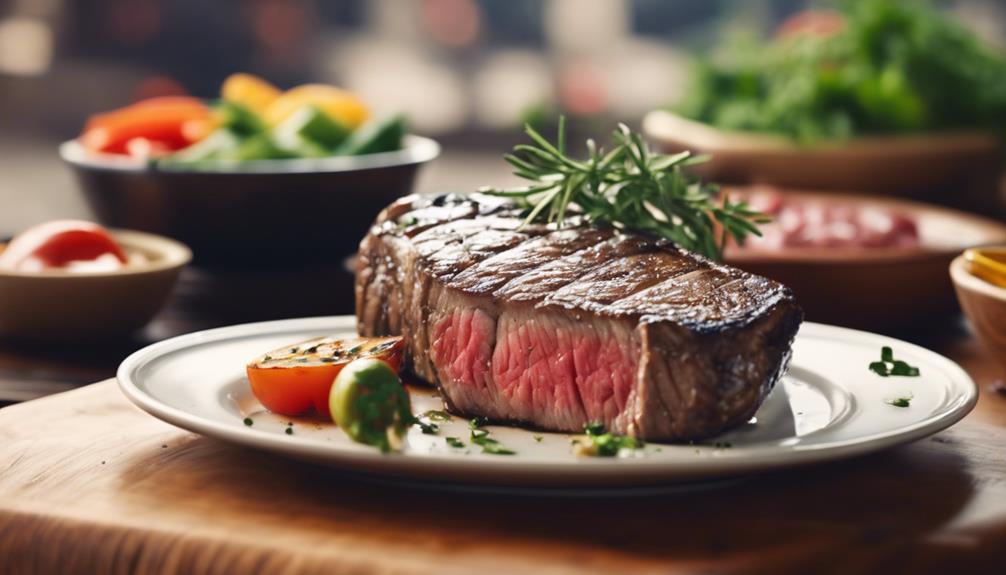
When deciding between the New York strip and Ribeye, consider your fat content, tenderness, and flavor preference. The New York Strip is cut from the short loin, giving it a leaner profile with a thick band of fat along one side. In contrast, the Ribeye, cut from the rib section, is known for its rich marbling and juiciness, which results in a more tender and flavorful experience.
Your taste plays a significant role in this decision. If you prefer a robust flavor with a tighter texture, the New York Strip might be your favorite cut. On the other hand, if you’re after a melt-in-your-mouth experience, the marbling and juiciness make it hard to beat. Consider the following points:
- Fat Content: New York Strip is leaner; Ribeyeis richer.
- Tenderness: Ribeye is more tender due to its marbling.
- Flavor: The New York Strip offers a robust flavor; Ribeyeis is more succulent.
New York Strip and ribeye are high-quality cuts catering to different cravings. Ultimately, the choice between these two popular steaks boils down to what you value more in your dining experience.
Frequently Asked Questions
Which Is Better, Ribeye or New York Strip Steak?
You’re wondering which steak is better. It depends on your preferences. Ribeye excels in marbling and meat tenderness, while the New York Strip offers a leaner texture. Consider cooking techniques, flavor profiles, price differences, and grilling tips.
What Is the Best Cut of Steak?
When deciding the best cut of steak, consider marbling comparison, flavor profile, and cooking techniques. Pay attention to fat content, butchering process, regional preferences, cost differences, aging methods, and nutritional value to find your preferred choice.
Is the New York Strip a Good Cut of Steak?
Yes, the New York Strip is a good cut of steak. Its tender texture, excellent marbling quality, and rich flavor profile make it perfect for grilling. Proper steak seasoning and cooking techniques enhance its savory taste and meat tenderness.
Why Is NY Strip so Popular?
You love the NY strip’s rich flavor profile, perfect marbling, and versatile cooking methods. Its historical significance and balanced texture make it a restaurant favorite, while its reasonable price point and dietary considerations boost its popularity.
Conclusion
Choosing between a New York Strip and a Ribeye ultimately depends on your taste. Go for the New York Strip if you crave a leaner, firmer steak with moderate marbling. Do you prefer a richer, buttery texture with more fat? The Ribeye is your go-to. Both cuts offer unique experiences, so think about your mood and enjoy a delicious meal tailored to your preferences.