When preparing for a barbecue, choosing the right smoking woods can be as significant as selecting the meat. Different types of wood, whether they’re logs, chunks, pellets, or chips, can dramatically alter the flavor of your dish. For instance, hickory imparts a strong, sweet smoke ideal for pork, while mesquite’s bold earthiness pairs perfectly with beef.
But it’s not just about the type—understanding the nuances between hardwoods and softwoods, and even the impact of regional differences, can elevate your cooking. So, how do you decide which wood to use for your next BBQ masterpiece?
Table of Contents
Key Takeaways
- Hickory, mesquite, apple, pecan, and oak are popular smoking woods with distinct flavor profiles.
- Logs, chunks, pellets, and chips suit different smoking methods and cooking durations.
- Fruit woods like apple and cherry add sweet, fruity flavors that are ideal for pork, poultry, and seafood.
- Hardwood options like hickory and oak provide slow-burning, robust smoke for meats.
- Choosing the right smoking wood enhances the flavor and overall BBQ experience.
Types of Smoking Woods
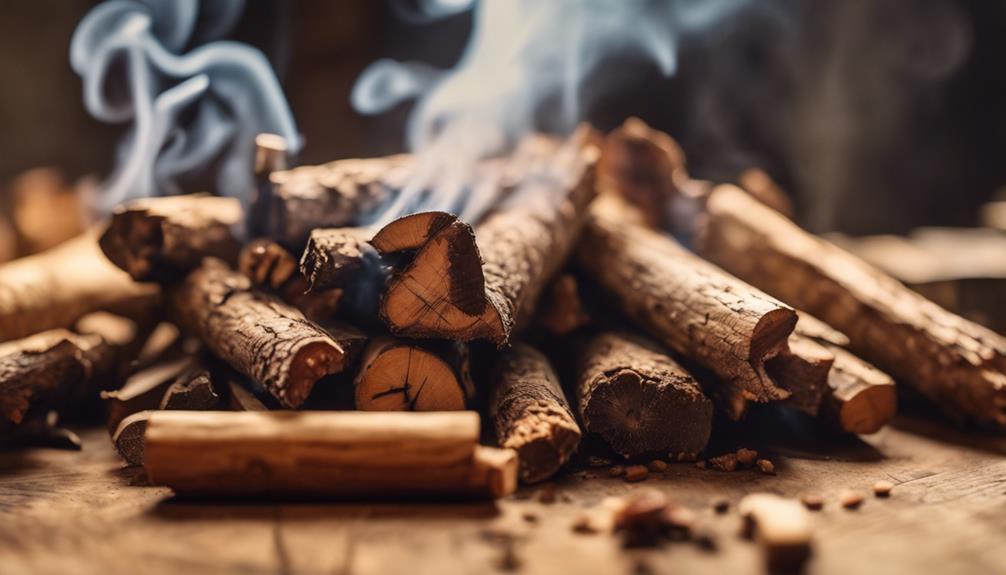
When it comes to smoking wood, you’ll find it in various forms, such as logs, chunks, pellets, and chips, each suited for different cooking methods and durations. Wood chunks are particularly versatile, providing a sustained smoke flavor ideal for longer smoking sessions.
They burn slower than chips, making them perfect for achieving that deep, rich flavor in meats like beef brisket or pork shoulder. Different types of hardwoods offer unique smoke flavors, enhancing the taste of your food in specific ways. Hickory provides a strong, hearty flavor that is great for red meats.
Oak offers a medium, balanced smoke, suitable for almost anything. Maple adds a subtle sweetness, while pecan brings a nutty aroma. For a more delicate touch, fruit woods like apple and cherry give a light, sweet smoke, enhancing pork, chicken, and even desserts and cheeses.
Avoid softwoods like cedar and pine, as they burn too quickly and leave unwanted residues. Instead, stick with hardwoods to guarantee the best results. The Pitmaster Shop offers a variety of premium smoking woods, helping you elevate your BBQ with the perfect smoke flavor. Don’t underestimate the power of the right wood chunk to transform your grilling experience.
Forms of Wood
When selecting smoking wood, you’ll come across different forms like chips, chunks, and logs, each suited for specific cooking methods. Understanding the difference between hardwood and softwood is essential, as it impacts the flavor and burn time. Let’s explore how these various forms and types can enhance your smoking experience.
Hardwood Vs. Softwood
Understanding the distinctions between hardwoods and softwoods is essential for mastering the art of BBQ smoking. When comparing hardwood vs. softwood, it’s important to recognize the types of wood that best suit your smoking needs.
Hardwoods, such as hickory, oak, and maple, are preferred in BBQ smoking due to their slow burn rate and ability to impart rich, complex flavors to meat. These types of wood guarantee consistent smoke, which is crucial for achieving that perfect BBQ taste.
On the other hand, softwoods like cedar and pine aren’t ideal for smoking. They burn quickly and produce a gummy residue that can leave an undesirable taste and even harmful substances on your food. While softwoods might be useful for quick, high-heat cooking methods or as a cooking surface, they lack the flavor depth and consistency that hardwoods provide.
Knowing the difference between hardwoods and softwoods can greatly enhance your smoking experience. By choosing the right type of wood, you’ll achieve the desired flavor profile and elevate your BBQ game. Stick with hardwoods for smoking, and you’ll enjoy a richer, more enjoyable BBQ experience every time.
Chips, Chunks, and Logs
Choosing between chips, chunks, and logs depends on the specific needs of your BBQ smoking session. Wood chips are your go-to option if you want to add extra flavor quickly. They’re perfect for shorter cooks like fish or chicken because they ignite easily and burn fast.
Just soak them in water for about 30 minutes before tossing them on your charcoal or in a smoker box. Wood chunks are an excellent choice for longer cooking times. They burn slower than chips, providing a steady and long-lasting source of smoke.
They’re ideal for larger cuts of meat like pork shoulder or brisket, ensuring consistent flavor infusion throughout the cooking process. For best results, place them directly on the charcoal or use them in an offset smoker. Logs, on the other hand, are typically used in offset smokers or larger BBQ pits.
They offer a robust, sustained smoke that’s perfect for lengthy smoking sessions. However, logs require more management, so they’re best suited for experienced pitmasters. Experimenting with different forms of smoking wood will help you find the best option for your BBQ needs. Whether wood chips for a quick cook or wood chunks for a longer session, each form has unique benefits.
Hardwood Vs. Softwood
When choosing between hardwood and softwood for smoking, you’ll notice significant differences in heat and flavor. Hardwoods burn slowly and produce a rich, smoky taste, while softwoods burn quickly and can leave a gummy residue. This makes hardwoods ideal for smoking meats, whereas softwoods are better for quick, high-heat cooking.
Heat and Flavor Differences
In the smoking world, hardwoods like hickory and oak offer a slow, flavor-rich burn, while softwoods like cedar and pine burn quickly and leave unwanted residue. When selecting wood for smoking, hardwoods are your best bet. They produce the best smoke, giving your meats a deep, smoky flavor that’s hard to beat.
Hickory and oak are particularly popular because they provide a versatile flavor profile that complements a variety of proteins. Hardwoods burn slower and at a steadier temperature, which is crucial for long smoking sessions.
This slow burn not only guarantees that your meat gets thoroughly smoked but also that it absorbs the rich flavors over time. Conversely, softwoods like cedar and pine burn much faster and can leave a resinous residue, which can impart an undesirable taste to food.
Burning Efficiency Comparison
Hardwoods like oak and hickory outperform softwoods in burning efficiency, offering a slow, consistent burn ideal for smoking meats. Hardwoods also provide a more controlled and steady heat source, which is vital for achieving that perfect smoky flavor.
Wood chunks from hardwoods produce a long-lasting smoke, guaranteeing your meats absorb all the rich, desirable flavors. In contrast, softwoods like cedar and pine burn much faster and leave behind more residue. This quick burn rate makes them less effective for smoking since you’ll constantly need to replenish your wood chunks, disrupting the cooking process.
Plus, the residue can impart an unpleasant taste to your meats. For the best smoking experience, stick to hardwoods. They not only enhance the flavor but also provide a cleaner smoke. Softwoods are better suited for hot and fast cooking methods or as a cooking surface rather than for smoking.
Fruit and Citrus Woods
Fruit and citrus woods, like apple and cherry, infuse your barbecue with a light, sweet flavor perfect for pork, chicken, and even desserts. When you use wood chunks from these fruit trees, you’ll notice how they elevate the flavors of your smoked dishes. Applewood, known for its subtle fruity aroma, adds a mild sweetness that complements various proteins.
On the other hand, cherry wood provides a richer, mildly sweet flavor that makes your barbecue stand out. These woods are best used in chip form when paired with charcoal, as this combination enhances the flavor profile of your food. Imagine sinking your teeth into tender pork ribs or juicy chicken kissed by the gentle sweetness of apple or cherry smoke.
It’s a surefire way to impress your guests and satisfy your taste buds. Both apple and cherry wood are versatile and can be used for various foods, including cheeses and cured meats. When used correctly, these fruit and citrus woods can add a unique and delicious twist to your smoked dishes, making every bite memorable.
Using Smoke Wood

When you’re ready to elevate your barbecue game, understanding how to use smoke wood effectively is key. The type of wood you choose can make or break your dish. Logs, chunks, pellets, and chips each offer unique benefits. For instance, wood chunks and splits are best for traditional BBQ methods like offset smoking, while pellets excel in pellet grills. Here’s a quick guide to help you decide:
| Wood Form | Best For | Benefits |
|---|---|---|
| Logs | Long cooking sessions | Consistent heat, great for brisket |
| Chunks | Offset smokers, grills | Balanced smoke, easy to control |
| Pellets | Pellet grills | Efficient, easy-to-use |
| Chips | Short cooking sessions | Quick smoke, ideal for fish |
| Splits | Traditional BBQ | Slow burn, rich smoke flavor |
Specific hardwoods like hickory, oak, maple, pecan, and mesquite are excellent for slow burns, providing that deep, rich smoke flavor BBQ enthusiasts crave. Oak, for example, is a staple in Texan BBQ dishes. On the other hand, fruit and citrus woods such as apple and cherry impart a lighter, sweeter flavor, perfect for pork, chicken, and even desserts.
When choosing the best type of wood, consider the food you’re cooking and the duration. Remember, The Pitmaster Shop offers a variety of smoking woods, ensuring you find the perfect match to enhance your BBQ experience.
Wood Flavor Profiles
Understanding wood flavor profiles can transform your BBQ from good to unforgettable. Different woods impart unique flavors, and knowing which to use can elevate your dishes. Hickory wood offers a strong, smoky flavor with a hint of sweetness. It’s perfect for pork and chicken, making it a favorite in many BBQ settings.
If you’re smoking a rack of ribs or a whole chicken, hickory is your go-to choice for that robust, smoky taste. Mesquite wood provides a bold, earthy flavor. It’s ideal for grilling beef and game meats. The intense smoke from mesquite can stand up to the rich flavors of steaks and venison, ensuring every bite has character.
For a lighter touch, applewood imparts a fruity flavor that’s excellent for poultry, pork, and seafood. The subtle sweetness of apple wood smoke enhances the natural flavors without overpowering them. Pecan wood adds a nutty, slightly sweet taste, making it versatile for smoking pork, beef, and poultry.
It’s a great all-rounder when you want a balanced, smoky profile. Lastly, oak wood offers a milder smoke flavor, popular for smoking brisket, ribs, and sausages in Texan BBQ. Its balanced smoke doesn’t overshadow the meat, letting the natural flavors shine through.
Wood Controversies
The world of smoking woods is rife with controversies that can spark lively debates among BBQ enthusiasts. One hot topic is whether you should soak wood chunks and chips before using them. Some swear by soaking to produce a steadier, more controlled smoke, while others argue it delays the smoke production without adding real benefits. These debates don’t stop there. Consider these points of contention:
- Location Impact: Some believe the region where the wood grows deeply affects its flavor profile, arguing that local climate and soil conditions make a difference.
- Green vs. Seasoned Wood: There’s an ongoing debate about using green (fresh) wood versus seasoned (dried) wood. Greenwood is said to provide a more intense smoke flavor, but it can also produce harsh, bitter undertones.
- Bark Controversy: Should you remove the bark before smoking? Some claim bark adds undesirable bitterness, while others think it contributes to the wood’s natural flavor.
- Soaking Dilemma: BBQ aficionados are divided over whether soaking wood chunks and chips enhances or detracts from the flavor.
Ultimately, the wood you use for smoking can make or break your BBQ experience, and these controversies highlight pitmasters’ passionate preferences.
Buying Smoking Wood
After exploring the debates surrounding smoking woods, it’s time to focus on how to select and buy the best wood for your BBQ needs. First, consider the form of smoking wood you need—wood chunks, pellets, logs, or chips. Your choice should align with your cooking equipment and personal preferences.
Next, examine popular hardwood options like hickory, oak, maple, pecan, and mesquite. These woods are known for their slow-burning, flavorful smoke, making them ideal for various proteins. Explore fruit and citrus woods such as apple and cherry, which pair wonderfully with pork, chicken, desserts, and cheeses for a lighter, sweeter flavor.
When buying smoking wood, specialty shops like The Pitmaster Shop offer premium options, bundle deals, and even free US shipping on fuels. This can enhance your BBQ experience without breaking the bank. Don’t hesitate to explore different wood types to find the perfect match for your desired smoke flavor profile.
Whether you’re using wood chunks for a robust, long-lasting smoke or wood pellets for a more controlled burn, the key is to match the wood to the meat and your taste preferences. Happy smoking!
Frequently Asked Questions
What Woods Are Good for Smoking?
Fruit woods like apple and cherry offer a sweet, light flavor perfect for pork and chicken. Nut woods such as hickory and oak are great for slow-burning, adding a rich, smoky taste to meats.
What Wood Is Safe to Smoke From?
It would be best to use hardwoods like hickory, oak, and fruit woods like apple and cherry for smoking. They don’t have wood toxicity issues and offer great flavor profiles. Avoid softwoods and treated timber to guarantee safety and taste.
Is Smoking Woods Bad for You?
Yes, smoking wood can pose health concerns due to toxic chemicals like PAHs and HCAs. However, using wood in moderation and following healthy cooking practices can help minimize these risks and make smoked foods safer.
What Is Wood Slang for Smoking?
Wood slang for smoking refers to the unique terms and names for different types of smoking wood. Understanding the wood slang origins and cultural significance helps you select the best wood for your BBQ’s flavor profile.
Conclusion
In mastering the art of BBQ, picking the right smoking wood makes all the difference. With options like hickory, mesquite, and fruit woods, you can tailor your flavors to perfection. Whether you prefer logs, chunks, pellets, or chips, understanding hardwoods versus softwoods and their unique profiles will elevate your dishes. So, experiment and find your favorite combinations—your taste buds will thank you! Happy smoking!
Explore More Articles:
How to Smoke on a Gas Grill: Easy Tips for Flavorful BBQ