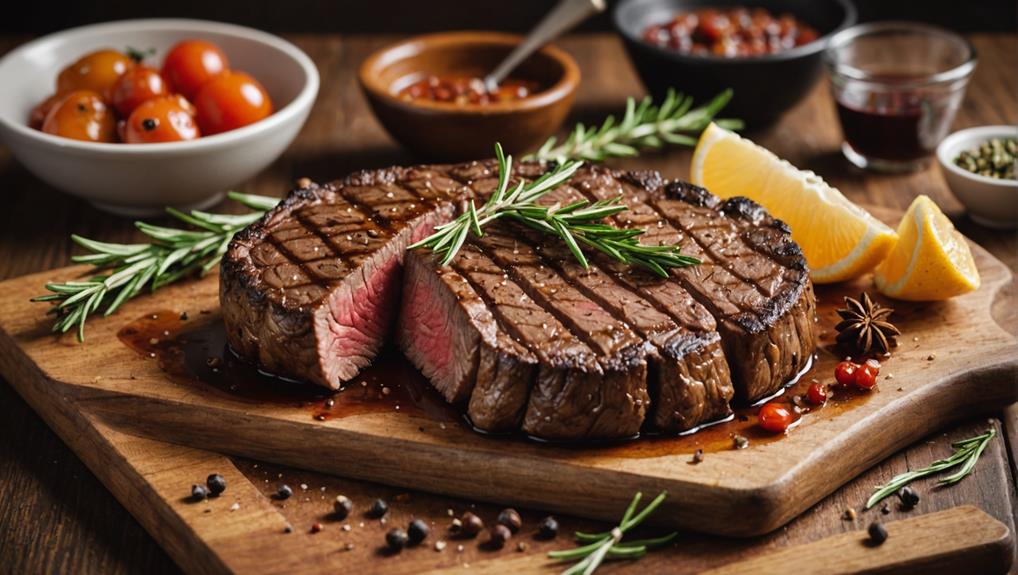
When you think about steak, the term ‘doneness’ might not be the first thing that comes to mind, but it’s a critical element in achieving that perfect bite. Whether you prefer your steak rare or well-done, understanding the nuances of each level can transform your culinary experience. The right doneness enhances texture and flavor, yet reaching that ideal state requires more than just guesswork. Are you using the right techniques to guarantee a juicy, flavorful outcome? And what role does resting play in this process? Let’s explore these questions and uncover the secrets behind perfect steak doneness.
Table of Contents
Key Takeaways
- Steak doneness levels range from rare to well-done, each with specific internal temperature guidelines.
- Resting steak after cooking enhances juiciness, tenderness, and flavor.
- A meat thermometer ensures accurate doneness by measuring internal temperature without losing juices.
- Rare steak is deep red and juicy, while well-done has no pink inside.
- Safe cooking practices recommend resting meats to ensure safe consumption and enhanced flavor.
Understanding Steak Doneness
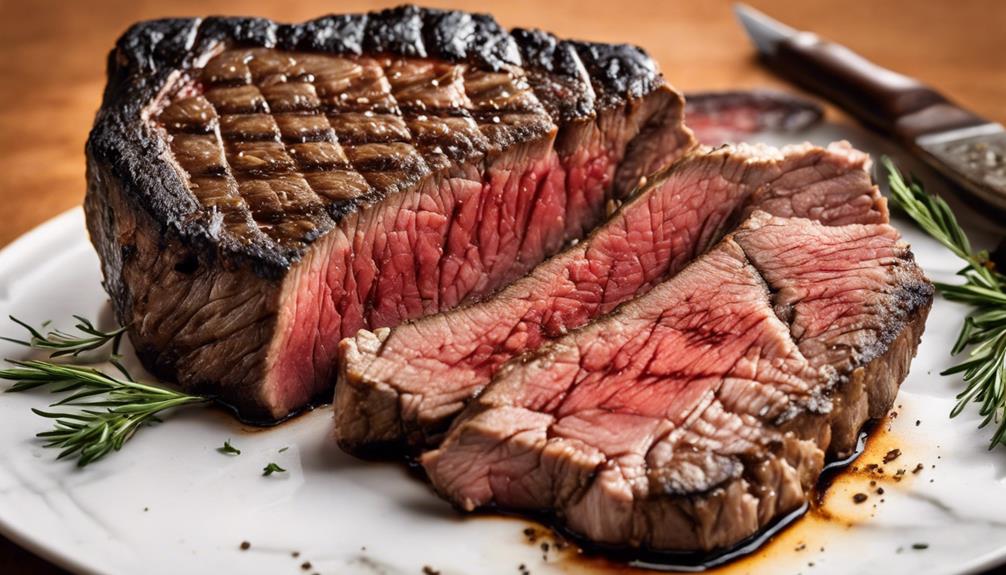
When it comes to cooking steak, understanding doneness is vital for achieving the perfect taste and texture. You might think you can rely on color or texture alone, but steak doneness is primarily determined by its internal temperature. Different doneness levels, like medium, rare, or medium, have specific temperature ranges that you’ll want to hit for your desired outcome.
For instance, medium rare is usually between 130°F and 135°F, while medium is between 140°F and 145°F.
To guarantee accuracy, using a meat thermometer is the best method. It takes the guesswork out and gives you a precise reading, allowing you to nail the perfect temperature. Insert the thermometer into the thickest part of the steak, avoiding bone and fat, to get an accurate temperature measurement.
Once you’ve cooked your steak to the right temperature, letting it rest is vital. Resting helps the juices redistribute, ensuring a juicy, evenly cooked steak when you cut into it. By understanding these temperature guidelines and using a meat thermometer, you’ll master steak doneness and impress everyone at the dinner table. Enjoy your perfectly cooked masterpiece!
Rare Steak Characteristics
When you aim for a rare steak, focus on achieving a deep red color and a juicy texture by maintaining the internal temperature between 120°F and 125°F.
It’s best to take the steak off the heat at 115°F and let it rest for five minutes to allow the center to warm slightly and retain its juices.
This brief resting phase guarantees the steak stays tender and flavorful, perfect for those who enjoy minimal cooking.
Temperature and Texture
Getting the perfect rare steak requires paying close attention to its temperature and texture. When you’re aiming for that beautiful rare finish, the internal temperature should reach 120-125°F. This guarantees the steak retains its deep red color and juicy texture, distinguishing it from a Medium Rare Steak, which is cooked to a slightly higher temperature. The key to achieving this is precision in cooking and diligent temperature monitoring. You want the center of your steak to be warm yet maintain that cool, tender quality that sets a rare steak apart.
Imagine slicing into your steak and experiencing:
- A deep red center that commands attention and satisfies your rare steak cravings.
- Juicy, succulent bites that melt in your mouth, leaving you yearning for more.
- A contrast between the warm edges and the cool center creates a harmonious balance of textures.
These elements are what make a rare steak so special.
Removing your steak from heat at 115°F and allowing it to rest for a few minutes enhances these qualities, creating a memorable dining experience.
Embrace the art of rare steak cooking, and you’ll be rewarded with these delightful textures and flavors.
Resting and Juiciness
Achieving the perfect rare steak isn’t just about hitting the right temperature; it’s also about mastering the resting process.
When you remove your rare steak from the heat at 120°F, the center remains cool and a deep red. But the journey to juiciness doesn’t stop there.
Resting your steak at around 115°F for five minutes is essential. This short pause allows the steak to relax, letting its natural juices redistribute evenly throughout the meat.
Skipping this step can lead to a less tender and flavorful experience, as the juices might run out when you cut into the steak too soon.
Medium Rare Preferences

With its perfect balance of juiciness and tenderness, medium rare steak stands out as the top choice for steak lovers everywhere. You achieve this ideal doneness by cooking the steak to an internal temperature of 130-135°F, resulting in a warm, red center with pink edges. When grilling, it’s essential to remove your steak at about 125°F and let it rest. This guarantees the juices are redistributed, giving you that signature succulent bite.
The medium rare preference isn’t just about the temperature; it’s about the experience. The soft texture and juiciness create a taste sensation that’s hard to resist. For those who adore the flavor of red meat but find rare too underdone and well-done too tough, medium rare is a perfect compromise.
Imagine:
- Slicing into a steak and seeing the perfect pink hue, knowing it’s just right.
- The first juicy bite melts in your mouth, a burst of flavor with each chew.
- Sharing a meal with friends and watching their faces light up with delight over a perfectly cooked steak.
When you choose medium rare, you’re opting for a dining experience that’s both classic and memorable.
Cooking Medium Steak
When cooking a medium steak, your goal is to achieve an internal temperature of 140-145°F, which guarantees a warm, pink center. Start by removing the steak at 135°F, allowing it to rest and reach the perfect balance of flavor and texture. Resting your steak is key to preserving its juiciness and achieving that ideal medium doneness.
Achieving Perfect Temperature
To cook a medium steak to perfection, focus on reaching the right internal temperature for ideal flavor and tenderness. A medium steak should have a warm pink center, achieved by cooking it to an internal temperature of 140-145°F. To avoid overcooking, remove the steak from heat at 135°F. This step requires precision, and that’s where a digital meat thermometer becomes your best friend. It helps you monitor the temperature closely, ensuring your steak comes out exactly as you desire.
Cooking a medium steak is perfect for those who want a less red but still juicy and flavorful result. As you aim for that perfect medium, remember:
- Anticipation: Watching the thermometer climb towards the target temperature.
- Satisfaction: Slicing into a perfectly pink center and seeing the juices flow.
- Pride: Serving a steak that’s both tender and full of flavor.
Once you’ve hit that sweet spot of 135°F, let the steak rest. This resting period, essential for enhancing juiciness, allows the juices to redistribute throughout the steak. By focusing on temperature and timing, you’ll master the art of cooking a medium steak with ease.
Balancing Flavor and Texture
Balancing flavor and texture when cooking a medium steak involves understanding the interplay between heat and time. You’re aiming for that perfect pink and warm center with lightly cooked edges, all while maintaining tenderness. Cooking your steak to 140°F to 145°F achieves this ideal medium doneness. However, here’s a pro tip: remove your steak from the heat at around 135°F. This little trick guarantees that as it rests, it’ll reach that perfect doneness without overcooking.
When you balance the heat and time right, you’re rewarded with a steak that’s tender but not too red, a great choice for those who prefer less red meat. The goal is to create harmony between the steak’s flavor and its texture, allowing each bite to be both juicy and full of rich taste.
Here’s a quick guide to help you visualize:
| Temperature (°F) | Result |
|---|---|
| 135°F | Remove from heat |
| 140°F – 145°F | Medium doneness |
| Warm, pink center | Balanced texture and flavor |
Resting for Juiciness
Achieving the perfect medium steak isn’t just about cooking; it’s also about what happens after the heat is off. Resting your steak is vital, as it allows the juices to redistribute, enhancing both tenderness and flavor. Once you’ve cooked your medium steak to an internal temperature of 140°F to 145°F, resist the urge to dive right in. Instead, let it rest for 5-10 minutes. This brief pause guarantees the steak retains its moisture and juiciness, preventing dryness that can ruin your meal.
During this resting period, the steak’s water-holding capacity increases, locking in those precious juices that deliver flavor in every bite. The center stays warm and tender, promising a succulent eating experience that’s worth the wait.
Consider these benefits of resting your steak:
- Tender bites: Experience a steak that’s easy to cut and delightful to chew.
- Flavor explosion: Maximize the taste with every mouthful.
- Juicy satisfaction: Avoid disappointment by ensuring each slice is succulent.
Resting is necessary for achieving the ideal balance of doneness and juiciness in your medium steak. Patience pays off—your taste buds will thank you!
Medium Well Insights
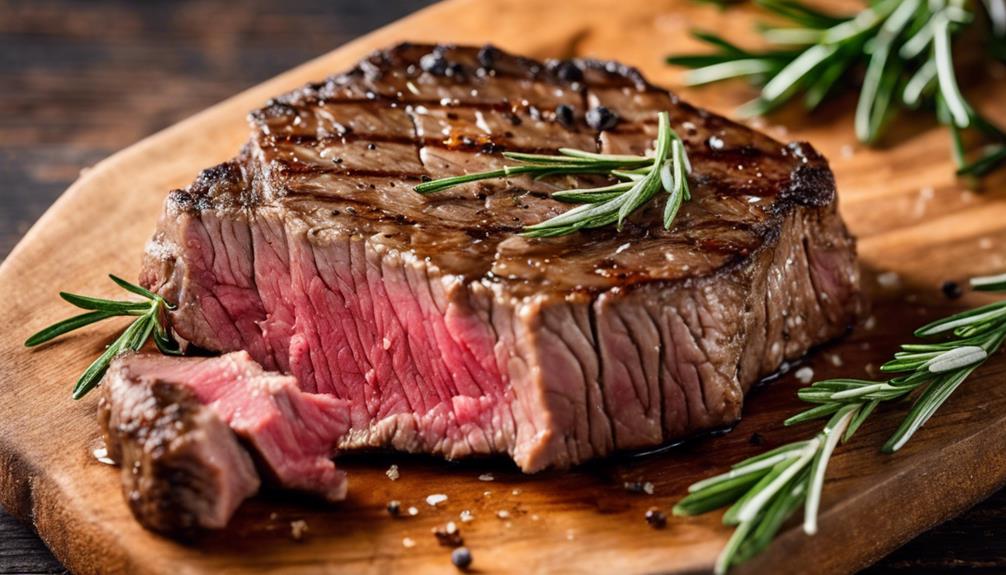
When it comes to preparing a medium-well steak, patience and precision are important for achieving that perfect balance of doneness. Your medium well steak should reach a target temperature of 150°F to 155°F. The cooking process involves closely monitoring the heat to make sure it’s just right. You’ll want to remove the steak from the heat source at 145°F. This guarantees the internal temperature will rise to the desired range as it rests. The steak should have a hot center with a slight pink hue that’s mostly absent on the edges.
The resting period is essential. After reaching the target temperature, let the steak sit for 5-10 minutes. This resting allows the juices to redistribute, enhancing both the flavor and the juiciness of your steak. Even though the center remains slightly pink, it will be mostly cooked through and satisfying. By exercising patience during this stage, you make sure that your medium well steak is flavorful and not too dry.
Achieving Well Done
[TEXT]:For a well-done steak, precision and patience are key to guaranteeing a flavorful result. You need to cook your steak to an internal temperature of 160-165°F. However, aim for 155°F while on heat to avoid overcooking, which can lead to a chewy texture. Once you reach this temperature, remove the steak from the heat. Don’t skip resting—it’s essential for achieving the perfect well-done steak.
To evoke the best flavor and texture, remember these emotional cues:
- Patience: The juiciest, well-done steak requires waiting for it to reach the right temperature.
- Precision: Using a dependable meat thermometer guarantees you hit that perfect internal temperature every time.
- Passion: Your dedication to cooking it right will reward you with a delicious meal.
Cooking a steak well done doesn’t mean sacrificing juiciness or flavor. By letting it cook to an internal temperature of 155°F on the heat and then allowing it to rest, you guarantee that the juices redistribute throughout the meat. It’s this careful attention to internal temperature and resting that makes a well-done steak enjoyable.
Importance of Resting
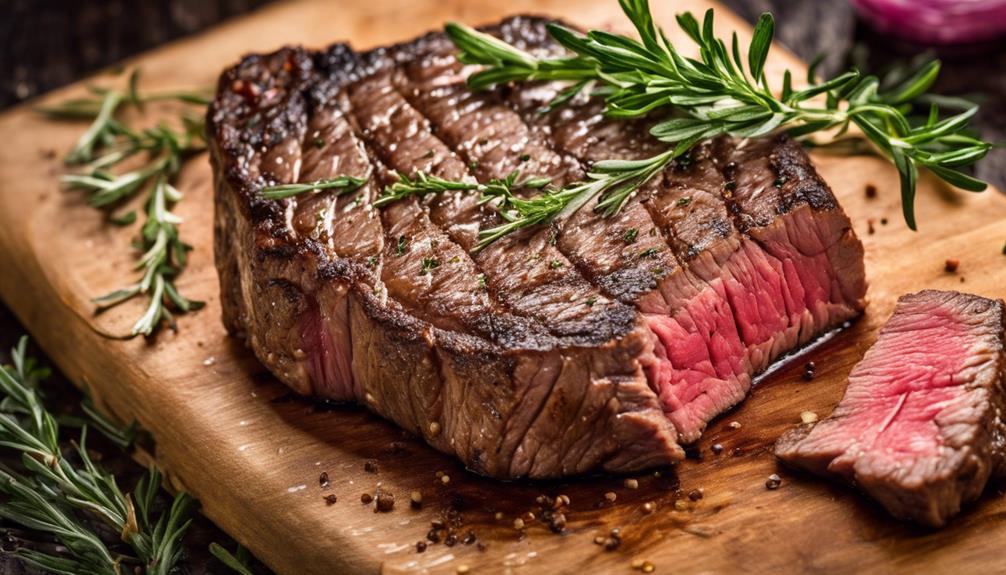
When you rest your steak before serving, you’ll enhance its juiciness by allowing the juices to redistribute evenly.
This process also helps equalize the temperature throughout the meat, ensuring a consistent flavor profile.
Enhancing Meat Juiciness
To achieve the juiciest steak, resting the meat before serving is essential. When you allow your steak to rest, you’re giving it time to enhance its water-holding capacity, which means less liquid loss and more juiciness. As the meat rests, the juices have a chance to redistribute evenly, ensuring every bite is flavorful and tender. This step is vital because once you remove the steak from the heat, its temperature rises by 3-5°C (5-9°F), making resting essential to lock in juiciness.
Consider these moments when resting your steak:
- Anticipation: The excitement builds as you wait for the first succulent bite.
- Satisfaction: You’ll experience the full flavor and tenderness you worked hard to achieve.
- Pride: Impress your friends and family with a perfectly cooked, juicy steak.
Resting your meat at its peak cooking temperature also guarantees ideal carving and structure. By allowing this essential period, you’re not just preventing a flood of juices from escaping onto your plate; you’re also ensuring that your steak remains a succulent masterpiece, ready to be savored.
Temperature Equalization Benefits
Resting your steak is important because it consistently ensures temperature equalization, enhancing both flavor and texture. After you remove the steak from the heat source, the internal temperature continues to rise by 3-5°C (5-9°F).
This rise occurs as the heat redistributes throughout the meat, achieving temperature balance. This process maximizes that your steak isn’t overcooked, as those peak cooking temperatures are reached just before you remove it from the heat.
By resting meat, you allow the juices to redistribute, contributing to a juicier and more tender steak.
When you cut into a steak immediately after cooking, the juices can run out, leaving the meat dry. Resting meat increases its water-holding capacity, meaning you get to enjoy a succulent steak with every bite.
Additionally, resting makes it easier to carve and present, as the muscle fibers have relaxed, making the steak more structurally sound.
Unlike sous-vide cooking, which maintains temperature equilibrium throughout the process, traditional cooking methods benefit greatly from resting to achieve a similar effect. By understanding the benefits of temperature equalization, you can optimize your steak to maintain its peak texture and juiciness, enhancing your overall dining experience.
Improving Flavor Profile
How does letting a steak rest enhance its flavor profile? By giving the juices time to redistribute, resting guarantees that every bite is filled with moisture and taste. When you take the steak off the heat source, the internal temperature continues to rise by 3-5°C (5-9°F), which helps achieve a perfect temperature balance. This critical step seals in the savory essence and improves the overall flavor profile. Resting also boosts the meat’s water-holding capacity, reducing liquid loss and ensuring a more succulent outcome.
When you allow your steak to rest, envision this:
- Juicy Delight: Each bite leaves you enjoying the luscious, flavorful tastes.
- Ideal Texture: Carving becomes effortless, with a consistency that turns every slice into a masterpiece.
- Appetizing Aroma: An enticing fragrance wafts through the air, promising a memorable meal.
Additionally, utilizing sous-vide cooking maintains temperature balance right from the beginning, allowing for a uniform and delightful flavor profile. By honoring the practice of letting it rest, you guarantee your steak maintains its peak cooking temperatures, achieving the best level of doneness. So next time you’re excited to dig into a perfectly cooked steak, remember that a little patience plays a significant role in unlocking its full potential.
Using a Meat Thermometer
When it comes to cooking the perfect steak, an instant-read digital meat thermometer is your best friend. Using a meat thermometer guarantees that your steak reaches a temperature of at least the desired doneness without compromising flavor or safety. Insert the probe into the thickest part of the steak for the most accurate reading. It’s important to remove the steak from the heat source when it’s 5 degrees below the desired temperature. This allows the steak to continue cooking off the heat and reach the perfect doneness.
Here’s a quick guide to evoke feelings of satisfaction as you achieve steak perfection:
| Feeling | Temperature (°F) | Description |
|---|---|---|
| Anticipation | 125 | Rare – Cool red center |
| Excitement | 135 | Medium Rare – Warm red center |
| Accomplishment | 145 | Medium – Warm pink center |
Avoid cutting into the steak to check doneness, as this can result in a loss of juices and lead to inaccurate readings. Trust your meat thermometer to deliver a steak that’s both delicious and safe to eat. With practice, you’ll master the art of steak cookery, impressing your taste buds and those of your guests.
Visual Indicators of Doneness
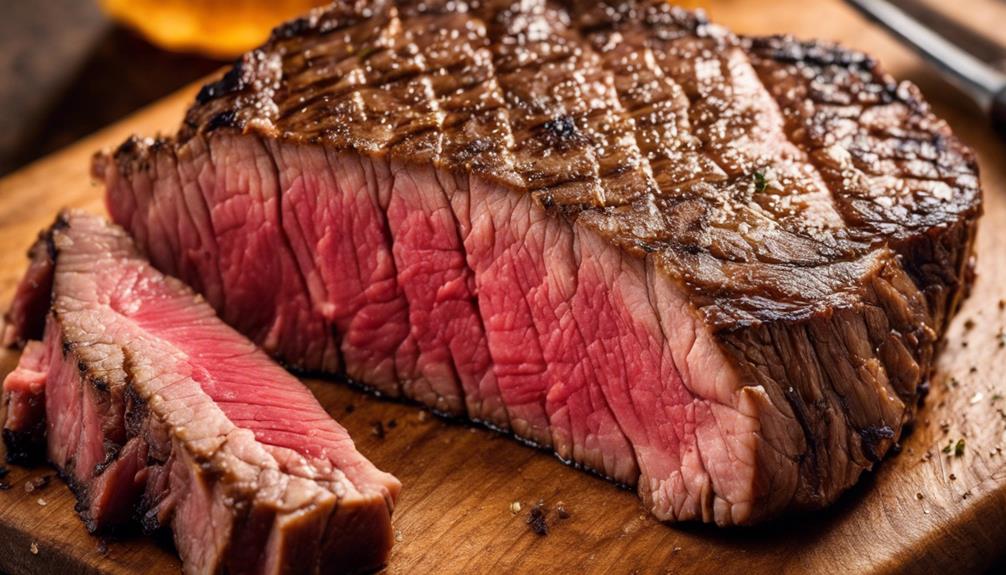
While a meat thermometer guarantees precise doneness, your eyes can also be a reliable guide when cooking steak. Recognizing the visual indicators of each level of doneness can elevate your grilling game.
For a rare steak, look for a deep red center that’s juicy, hinting at a temperature between 120-125°F. When you crave a medium-rare steak, seek a warm red center with pink edges, falling in the 130-135°F range. Just picture that perfect balance of color!
As you progress to a medium steak, expect a warm pink center surrounded by lighter edges, signifying it’s reached 140-145°F. The visual indicators become even more subtle with medium-well steaks. Here, you should notice a hot center with just a slight pink hue, indicating a cooked temperature of 150-155°F.
- Rare steak: Deep red and juicy
- Medium steak: Pink center with lighter edges
- Well-done steak: No pink in the center
Safe Cooking Practices
Cooking steak safely involves more than just achieving the right level of doneness. To maintain Food Safety, it’s essential to reach the USDA-recommended internal temperature of 145°F (63°C) for beef, veal, and lamb. For ground or tenderized meats, aim for 160°F (71°C). You can’t rely on color or texture alone, so always use a meat thermometer. This tool is vital to accurately measure temperature and protect against harmful bacteria that might be present due to proteolytic breakdown.
Here’s a quick reference guide for safe cooking:
| Cut of Meat | Recommended Temperature | Notes |
|---|---|---|
| Whole Beef, Veal, Lamb | 145°F (63°C) | Rest for 3 minutes |
| Ground/Tenderized | 160°F (71°C) | Cook thoroughly |
| Poultry | 165°F (74°C) | Ensure juices run clear |
| Pork | 145°F (63°C) | Rest for 3 minutes |
| Well-Done Steak | 160°F (71°C) | No pink inside |
Non-proteolytic bacteria like E. coli typically don’t penetrate inside the meat, underscoring the significance of cooking to the correct temperature. For a Well-Done Steak, reach at least 160°F (71°C) to make sure it’s safe to consume. By following these guidelines, you protect your health and enjoy a deliciously safe meal.
Frequently Asked Questions
What Is the Best Doneness for Steak?
You should choose the best doneness based on your taste preferences. Use a meat thermometer to guarantee accuracy. Experiment with cooking techniques to find what you enjoy most, from juicy rare to a fully cooked, well-done steak.
How Do You Know if a Steak Is Medium Rare?
To identify a medium rare steak, use visual cues and touch to check for a warm, red center. Confirm with a meat thermometer reading 130-135°F. Consider cooking time and always allow a resting period for accuracy.
What Are the Five Types of Doneness in Meat?
You can determine the five types of doneness in meat through cooking techniques, temperature control, and understanding flavor profiles. These are rare, medium rare, medium, medium well, and well done, each offering distinct textures and taste experiences.
What Is Steak at 145?
At 145°F, your steak achieves a warm pink center, balancing juiciness and texture. Monitor the cooking time closely to guarantee it reaches this temperature range. Rest the steak to preserve its juiciness level and enhance flavor.
Conclusion
When cooking steak, mastering doneness is key to enhancing your dining experience. Whether you prefer rare or medium well, knowing the right temperatures and using a meat thermometer guarantees perfection. Don’t skip resting; it lets juices redistribute, making every bite juicy and flavorful. Please pay attention to visual cues, too, as they can guide you in achieving the ideal texture. With these tips, you’ll safely enjoy delicious, perfectly cooked steaks every time.