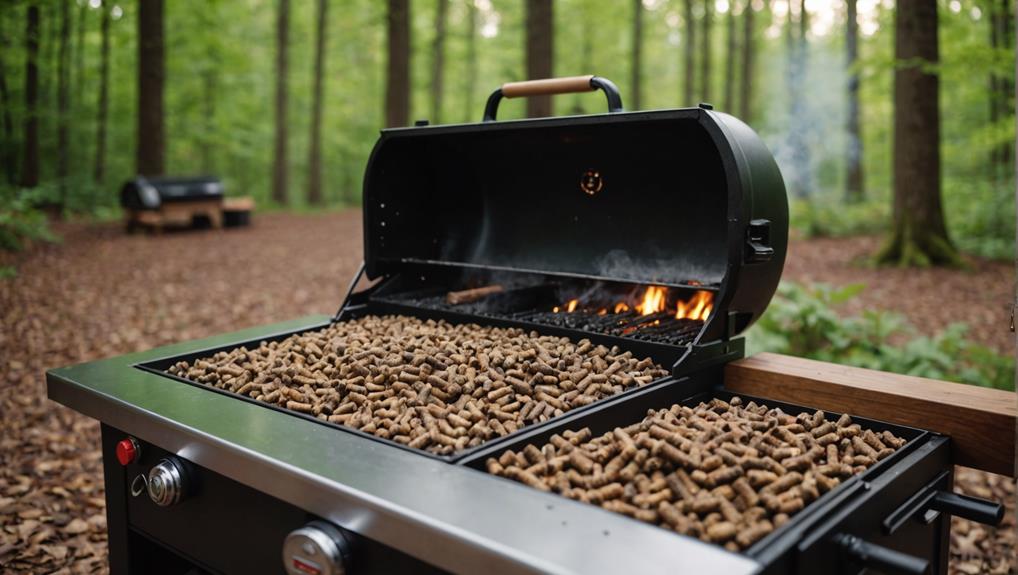
When you think about enhancing your grilling experience, understanding what Traeger pellets are made of becomes essential. These pellets combine a base wood, usually alder or oak, with various flavor woods like apple, pecan, or cherry to deliver unique tastes. But have you ever wondered how they achieve that perfect balance of consistent burn and rich flavor?
The secret lies in the production process, which involves transforming wood into a sustainable grilling fuel. Are you curious about how they do it and why it matters for your grilling?
Table of Contents
Key Takeaways
- Traeger pellets are crafted from a blend of base wood and flavor oils.
- Base woods like alder or oak ensure a consistent burn.
- Fruitwood blends contain 70% basewood and 30% fruitwood.
- Maple pellets are made with 100% maple wood for a mildly sweet flavor.
- Natural lignin in the wood binds fibers into the pellet shape during production.
Composition of Traeger Pellets
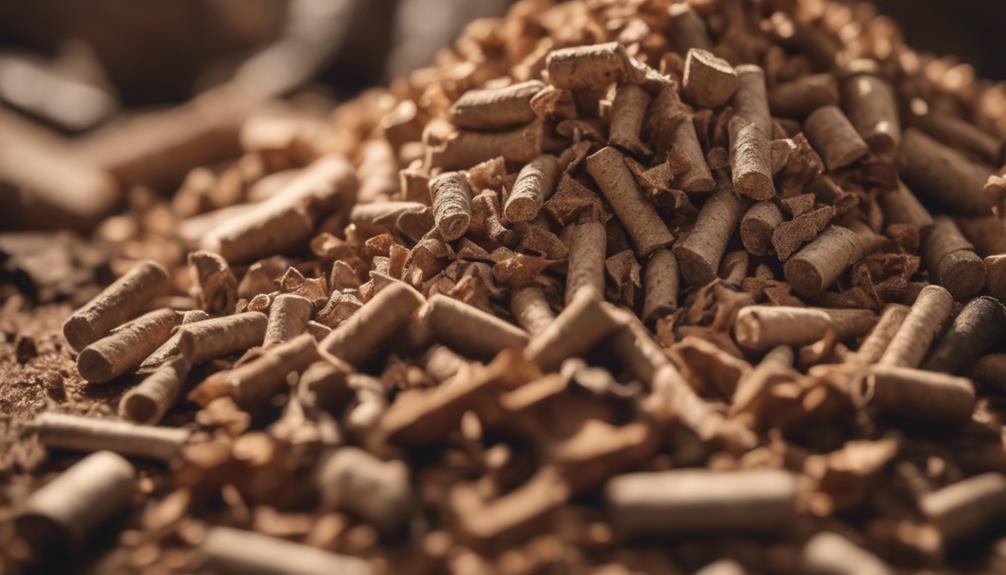
Have you ever wondered what exactly goes into making Traeger pellets? Traeger pellets are crafted with a blend of base wood, typically alder or oak, combined with flavor oils to guarantee a consistent burn and enhanced flavor. This unique composition sets Traeger pellets apart, offering a reliable and flavorful grilling experience every time.
For those who love a strong, smoky taste, Traeger’s Mesquite or Hickory pellets are perfect. These pellets contain 100% base wood, either alder or oak and are infused with specific flavor oils to deliver that distinct smoky essence you crave. On the other hand, if you’re looking for a fruity twist, Traeger offers Apple, Pecan, or Cherry pellets.
These varieties consist of 70% base wood and 30% fruit wood, adding a delightful fruity aroma to your smoke. For a mildly sweet flavor, opt for Maple pellets. These are made entirely from 100% maple wood, providing a subtly sweet profile different from the others. The composition of Traeger pellets can vary depending on your region, giving you access to a diverse range of flavors and aroma intensities to suit your grilling preferences.
Hardwood Sources
Understanding the hardwood sources of Traeger pellets is key to appreciating their unique flavors and consistent performance. Traeger pellets are made from pure hardwood, ensuring you get the best taste and quality in your grilling experience.
The foundation of these hardwood pellets often comes from base woods like alder or oak, which provide a neutral and reliable burn. Here’s a quick breakdown of the hardwood sources and their compositions:
| Pellet Type | Base Wood | Flavor Wood Content |
|---|---|---|
| Mesquite/Hickory | Alder or Oak | Flavor oils added |
| Apple | 70% Alder or Oak | 30% Applewood |
| Pecan | 70% Alder or Oak | 30% Pecan wood |
| Cherry | 70% Alder or Oak | 30% Cherry wood |
| Maple | 100% Maple | No base wood |
Flavored blends like Mesquite and Hickory use base woods with additional flavor oils to create distinct profiles. Apple, Pecan, or Cherry pellets mix 70% base wood with 30% fruit wood for a fruitier flavor. Maple pellets stand out with their 100% maple composition, offering a mildly sweet taste.
Production Process
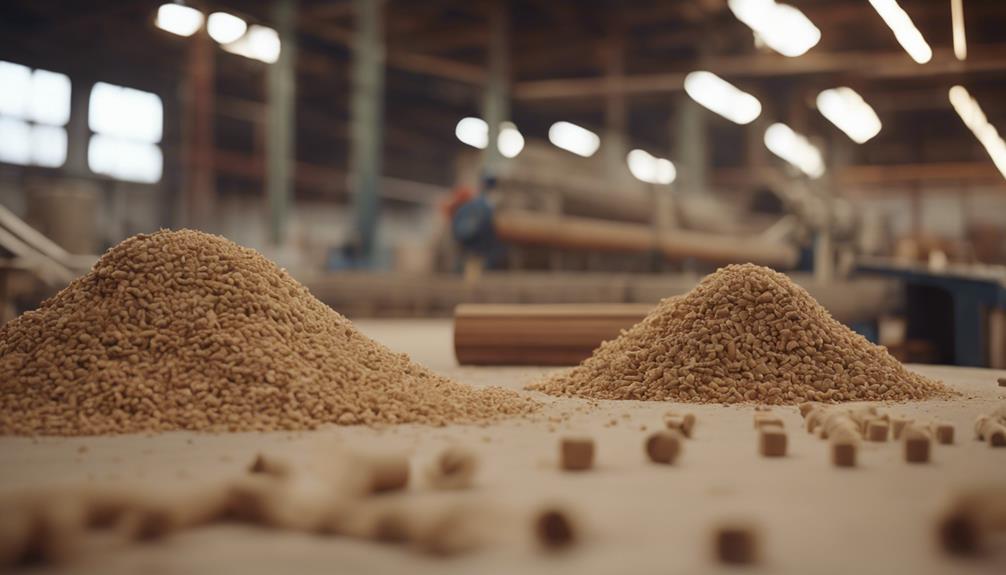
The production process of Traeger pellets guarantees that each pellet is crafted with precision and sustainability in mind. It starts with logs, branches, and excess timber, chipped and ground into wood fiber. This wood fiber then undergoes an essential drying process to reduce its moisture content to just 6%, ensuring a higher material concentration.
The wood fiber is magnetically scanned to remove any metal objects to maintain quality. Once cleaned, the fiber is pressed through small holes with heat. This pressing action, facilitated by the natural binding agent lignin found in wood, forms a distinctive pellet shape.
Recycling excess wood fiber makes the Traeger production process especially efficient and sustainable. This material isn’t wasted; it powers the pellet mill itself. Traeger significantly reduces waste and energy consumption by utilizing the byproducts of their production.
Environmental Impact
When you choose Traeger pellets, you’re opting for a grilling method that’s kinder to the environment. Traeger pellets are made from compressed, dried wood fiber, a renewable and sustainable fuel source. This production process not only harnesses the natural binding agent in wood, lignin but also recycles excess wood fiber to power the pellet mill, minimizing waste.
This efficient use of resources greatly reduces the environmental impact. Traeger pellets are environmentally friendly and offer superior fuel efficiency, unlike traditional charcoal or propane grilling methods. Charcoal grilling releases higher amounts of carbon monoxide and other pollutants, while propane grilling relies on fossil fuels.
In contrast, Traeger pellets’ use of renewable wood sources means a smaller carbon footprint, contributing to a healthier planet. Moreover, the absence of additional additives in Traeger pellets ensures you’re not burning harmful chemicals during your cookouts. This makes your grilling sessions cleaner and safer for the environment and your health.
Pellet Quality Standards

When considering pellet quality standards, you’ll want to focus on wood source consistency and manufacturing process control. Ensuring that the wood used is of uniform quality and type guarantees a reliable flavor profile every time. Additionally, strict manufacturing controls are essential to maintain the pellets’ integrity and performance in your grill.
Wood Source Consistency
Ensuring wood source consistency is crucial for maintaining Traeger’s pellet quality standards. When you use Traeger wood pellets, you’re guaranteed a grilling experience emphasizing flavor and reliability. Traeger achieves this by meticulously selecting and blending their base wood and flavor oils to create various pellet options tailored to different tastes. Here are key aspects of Traeger’s wood source consistency:
- Base Wood Stability: Most Traeger pellets use alder or oak as their base wood, ensuring a stable burning rate and heat output.
- Flavor Oil Application: For varieties like Mesquite or Hickory, 100% base wood is infused with flavor oils, providing a robust taste without compromising consistency.
- Fruit Wood Integration: Traeger’s fruit-flavored pellets, such as Apple or Cherry, blend 70% base wood with 30% fruit wood, delivering a distinct taste while maintaining consistent performance.
- Pure Wood Options: For those seeking specific flavors, Traeger offers 100% pure wood pellets like Maple, which are perfect for adding a mild, sweet flavor to your dishes.
Manufacturing Process Control
Maintaining pellet quality standards starts with strict control over the manufacturing process. Traeger guarantees that every pellet you use in your grill is consistent and reliable by carefully overseeing each production stage. The process begins with a blend of base wood, typically alder or oak, combined with flavor oils to create various taste profiles.
During manufacturing, wood fiber is pressed through small holes using heat to form pellets. This step is essential for maintaining consistency and quality, ensuring the pellets’ uniform size and density. Traeger controls the manufacturing process to ensure that its pellets provide consistent BTUs and a reliable burn rate.
Different flavor compositions, such as 100% base wood for Mesquite or Hickory and a mix of base wood and fruitwood for Apple, Pecan, or Cherry, are also carefully monitored. This meticulous attention to detail guarantees that each pellet type meets specific performance standards.
While other brands like Todd from AMNPS, Cookingpellets.com, BBQrs Delight, and Barbecuewood.com offer varied compositions, Traeger’s focus on manufacturing process control sets them apart, providing a premium grilling experience every time.
Flavor Varieties
Traeger pellets come in various flavorful options, such as Apple, Hickory, Mesquite, Cherry, and Signature Blend, each designed to elevate your grilling experience. These flavor-packed pellets are crafted from a blend of base woods like alder or oak, combined with flavor oils to create a unique taste profile. This combination guarantees that each pellet delivers a distinct and rich flavor to your food. Each flavor has its unique characteristics:
- Apple: Offers a subtly sweet, fruity flavor that pairs well with pork, poultry, and baked goods.
- Hickory: Provides a strong, smoky flavor suitable for beef, ribs, and hearty vegetables.
- Mesquite: Delivers an intense, earthy flavor perfect for grilling robust meats like steak and brisket.
- Cherry: Adds a mild, sweet, and fruity flavor to chicken, fish, and desserts.
Traeger pellets enhance natural flavors, ensuring a reliable burn and a clean flavor for all outdoor cooking needs. For a versatile option, the Signature Blend combines the best elements of various woods to create a balanced flavor profile suitable for almost any dish. Choose the right flavor to match your meal and take your grilling to the next level.
Storage Tips
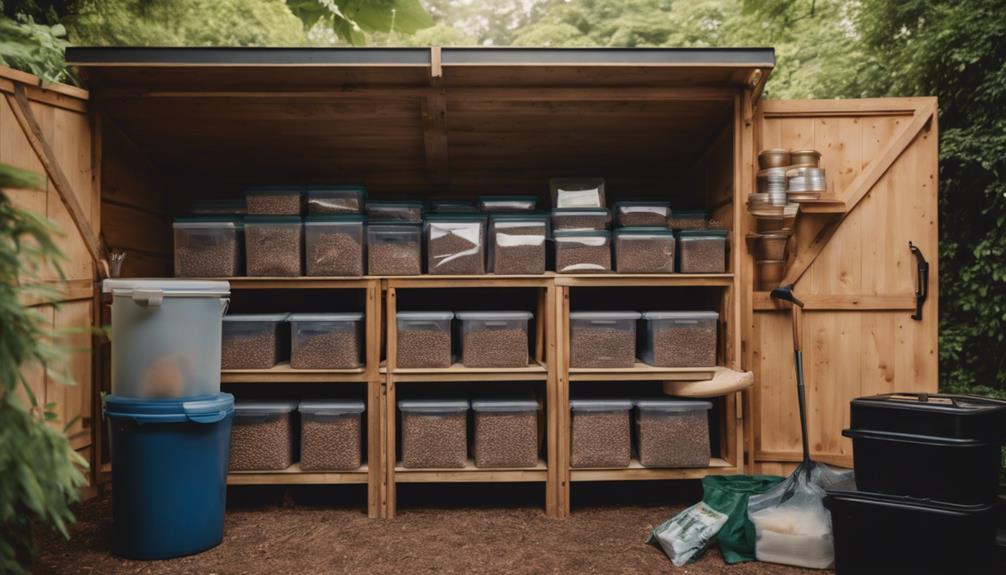
Store your Traeger pellets in top condition in dry, airtight containers and place them in a cool, dry area. This helps maintain their shelf life and prevents them from clumping due to moisture. Proper storage guarantees consistent burns and ideal flavor for your grilling sessions.
Ideal Storage Conditions
Store your Traeger pellets in dry, airtight containers to stay fresh and effective. Proper storage conditions are essential for maintaining their quality and performance. When you store your pellets correctly, you prevent moisture from causing clumping and deterioration, preserving their flavor and consistency. Here are four essential tips for ideal storage conditions:
- Use Airtight Containers: Store your pellets in sealed, airtight containers to remove moisture and humidity. This helps maintain their purity and consistent size.
- Keep Them Dry: Always store pellets in a cool, dry place. Moist environments can cause clumping and spoil their effectiveness.
- Avoid Direct Sunlight: Excessive heat can damage the pellets. Ensure your storage location is shaded and away from direct sunlight.
- Monitor Humidity Levels: It’s important to check the storage area frequently for signs of moisture in humid climates. If necessary, invest in a dehumidifier to maintain ideal conditions.
Shelf Life Maintenance
Maintaining the shelf life of your Traeger pellets isn’t just about storage; it’s about making sure they remain effective and flavorful over time. Quality pellets, made of pure hardwood with no fillers or additives, deliver consistent flavor and performance. Always store your pellets in dry, airtight containers to keep them in top condition.
This simple step prevents moisture absorption and contamination, which can degrade the pellets’ quality. If you live in a humid climate, consider additional measures to protect your pellets. Using a dehumidifier or adding desiccants to your storage area can help keep moisture at bay.
Proper storage can extend the shelf life of your Traeger pellets to 6 months or more without compromising their quality. It’s also important to inspect your pellets regularly. Look for signs of clumping, discoloration, or unusual odors, which can indicate spoilage. If you notice any of these signs, it’s time to replace them.
Usage and Performance
Regarding usage and performance, Traeger pellets provide consistent heat and rich, flavorful smoke, making them a top choice for grilling enthusiasts. The secret lies in their composition. Each pellet is crafted to guarantee a steady burn, providing uniform temperature and smoke throughout your cooking session.
This means you can expect your food to be cooked evenly with a delightful smoky taste every time. To get the most out of your Traeger pellets, consider these factors:
- Flavor Profile: Different blends, such as Mesquite, Hickory, and Maple, offer distinct flavors, allowing you to tailor the taste to your preference.
- Fuel Efficiency: Traeger pellets are designed to burn efficiently, maximizing the heat output and minimizing waste.
- Versatility: These pellets enhance the natural flavors of your ingredients, making them suitable for various dishes, from beef and pork to veggies.
- Quality Assurance: Traeger guarantees that its pellets maintain high standards and perform reliably, whether you’re grilling, smoking, or baking.
Frequently Asked Questions
Are Traeger Pellets Pure Wood?
Traeger pellets aren’t pure wood. They blend base woods like alder or oak with flavor oils to create unique flavor profiles. Some varieties mix base wood with fruitwood, while others, like maple, are 100% pure wood.
Do Traeger Pellets Have Chemicals?
Traeger pellets are safe for your health. They’re made from natural hardwood without harmful additives or chemicals, ensuring a clean burn and enhancing the natural flavors of your food.
How Are Traeger Grill Pellets Made?
You’re curious about how Traeger grill pellets are made. The manufacturing process involves grinding wood into sawdust, drying it, and compressing it into pellets without additives. This guarantees consistent burn quality and flavor for your grilling needs.
Do Traeger Pellets Use Fillers?
With Traeger pellets, you don’t need to worry about sustainability concerns. They don’t use fillers and are made from pure hardwood, guaranteeing that you’re always grilling with top-quality, eco-friendly materials.
Conclusion
So, when grilling with Traeger pellets, you’re not just cooking; you’re enhancing your culinary experience with a blend of base woods and flavor oils. The sustainable production process guarantees you’re using an eco-friendly fuel source. You can tailor your grilling to perfection with various hardwoods and flavor options. Remember, proper storage keeps your pellets performing at their best, guaranteeing every meal is a flavorful success. Enjoy the delicious difference Traeger pellets make!