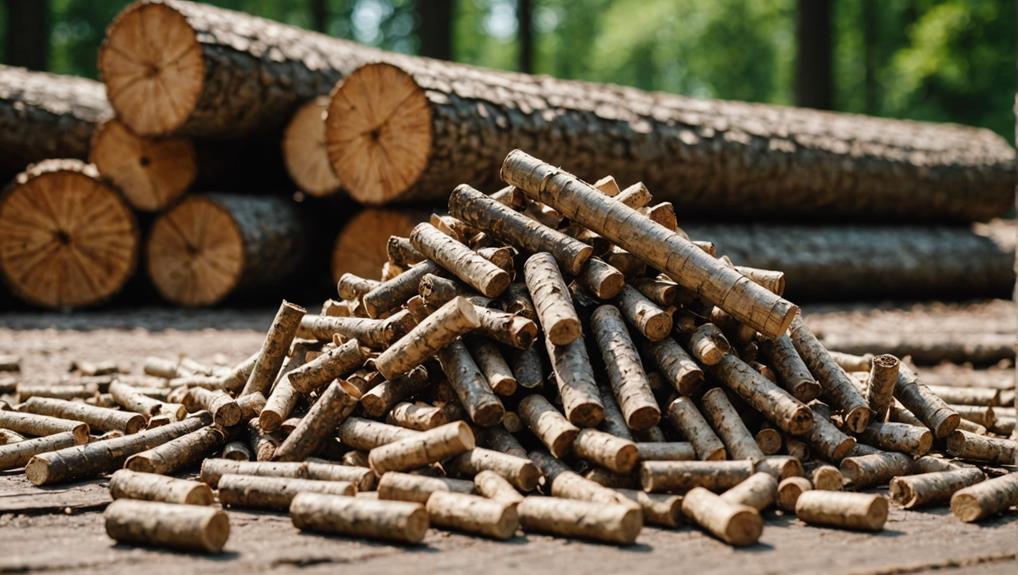
When considering hardwood versus softwood pellets for heating, you might wonder which option is better suited for your needs. Hardwood pellets, often from oak or maple, provide higher heat output but generate more ash, requiring frequent cleaning.
Meanwhile, softwood pellets, derived from pine or spruce, burn hotter and longer with less ash, offering a cleaner combustion experience. While hardwood pellets are premium, softwood options are more cost-effective and environmentally friendly. So, what factors should ultimately influence your choice between the two? Let’s explore these considerations further.
Table of Contents
Key Takeaways
- Heat Output: Softwood pellets burn hotter and provide higher BTU output than hardwood pellets.
- Cost: Softwood pellets are generally less expensive and more cost-effective than hardwood pellets.
- Ash Content: Softwood pellets produce less ash, making for easier cleanup and cleaner combustion.
- Environmental Impact: Softwood pellets have lower greenhouse gas emissions and support sustainable forestry practices.
- Efficiency: Softwood pellets offer more consistent warmth and longer burn times than hardwood pellets.
Composition and Source

Understanding the composition and source of hardwood and softwood pellets is essential for making an informed decision. Hardwood pellets are made from hardwood trees like oak and maple, which are known for their dense and hard composition.
On the other hand, softwood pellets come from softwood trees such as pine and spruce, which are less dense and softer than hardwood. The thick nature of hardwood pellets generally results in a higher heat output and efficiency, making them an excellent choice if you’re looking for robust and sustained heating.
However, this density also means hardwood pellets can be more expensive. Softwood pellets, while less dense, are often more cost-effective and can be a budget-friendly option for your heating needs. Both hardwood and softwood pellets are sustainable, renewable energy sources. The choice between them depends on your specific requirements, such as the desired heat output and budget constraints.
Heat Output and Efficiency
Understanding hardwood and softwood pellets’ heat output and efficiency is key to selecting the right fuel for your heating needs. Softwood pellets burn hotter and longer, providing a higher BTU output than hardwood pellets. This means they can produce more heat, making them a more efficient choice for your pellet stove.
The BTU measurement indicates the heat output capacity of fuel sources, with softwood pellets offering a notably higher BTU output. For instance, you need around 60,000 BTUs to heat a 2,000 sq ft home effectively, showcasing heat output’s importance in pellet selection.
When considering hardwood and softwood pellets, remember that the higher BTU output of softwood pellets directly impacts your pellet stove’s heat efficiency and performance. Softwood pellets burn more efficiently, meaning they not only produce more heat but also maintain it for a longer period.
This higher heat efficiency can result in more consistent warmth and potentially lower fuel costs over time. Thus, if heat output and efficiency are your primary concerns, softwood pellets are a superior choice for maximizing the performance and effectiveness of your heating system.
Ash Content and Cleanliness
Softwood pellets produce noticeably less ash than hardwood pellets, making them a cleaner option for your heating system. The lower ash content in softwood pellets, typically less than 1%, translates to easier cleanup and maintenance.
When you use softwood pellets, the reduced ash results in cleaner combustion, which helps maintain proper airflow within your stove. This enhanced airflow guarantees that your heating system operates more efficiently. Hardwood pellets, on the other hand, generate more ash due to the density and composition of the wood types used.
Different wood species contribute to varying ash content, with hardwood varieties generally producing more. This higher ash content can impact combustion efficiency, potentially leading to more frequent cleanings and maintenance requirements to keep your stove running smoothly.
Choosing wood pellets with low ash content, like softwood pellets, means you’ll spend less time dealing with ash buildup and more time enjoying your home’s warmth. Ultimately, the cleaner burn from softwood pellets enhances your stove’s performance and contributes to a more pleasant heating experience, with fewer interruptions for cleaning and maintenance.
Cost and Economic Considerations
While softwood pellets offer advantages in cleanliness and maintenance, they also tend to be easier on your wallet. They are generally less expensive than hardwood pellets, making them a cost-effective option for heating. If you’re on a tight budget or heating a smaller space, softwood pellets can be a budget-friendly alternative without compromising too much on performance.
When comparing hardwood vs. softwood pellets, it’s important to consider the price differences. Hardwood pellets, made from high-quality wood, often come with a higher price tag due to their denser composition and higher heat output. This means you might spend more upfront but could benefit from the longer burn time and greater efficiency.
Cost considerations don’t stop there. Regional availability and demand can significantly impact the price of both hardwood and softwood pellets. In areas where one type of wood is more abundant, you might find that particular pellet type more economical.
Understanding these cost dynamics can help you make an informed, economical choice for your heating needs. Whether you choose hardwood for its superior heat output or softwood for its affordability, balancing these factors will help you select the right pellet for your situation.
Environmental Impact
Choosing softwood pellets could lead to more sustainable heating practices that consider the environmental impact. Softwood pellets come from trees with faster growth rates, which can be replenished quickly. This rapid replenishment reduces the environmental impact compared to hardwood pellets, which come from trees that take longer to mature.
Softwood pellets also lower greenhouse gas emissions during the production and combustion phases. You’ll reduce your carbon footprint by opting for softwood over hardwood pellets. This is because hardwood pellets generally have a higher carbon footprint due to the longer maturation times of hardwood trees.
Additionally, using softwood pellets supports sustainable forestry practices. Forests managed for softwood production are often better positioned to be replenished quickly, ensuring a continuous supply without depleting resources. This not only maintains the forest ecosystem but also positively impacts biodiversity and overall forest health.
In essence, softwood pellets offer a sustainable option if you want to make a more environmentally conscious choice. They help lower greenhouse gas emissions, support sustainable forestry, and have a smaller carbon footprint than hardwood pellets.
Frequently Asked Questions
Which Is Better, Hard or Soft Wood Pellets?
You should consider heat output and ash content. Softwood pellets generally offer higher heat output and lower ash content. However, hardwood pellets have higher pellet density and species variety. You should also evaluate cost comparison, environmental impact, and storage tips.
Is There a Difference in Wood Pellets?
Yes, there’s a difference in wood pellets. Pellet composition, moisture content, and pellet durability vary by wood species. Factors like heat output, cost comparison, ash production, environmental impact, pellet density, and the manufacturing process also distinguish them.
Do Hardwood or Softwood Pellets Burn Cleaner?
Softwood pellets burn cleaner than hardwood due to lower ash content and residue amounts. They offer better combustion efficiency, reduced emission levels, and less environmental impact. Hardwood pellets have higher ash content, potentially affecting stove maintenance and smoke production.
Which Wood Pellets Burn the Longest?
If you want pellets that burn the longest, choose hardwood. Their higher pellet density, lower moisture content, and efficient burning make them last longer. However, the quality of ash production, storage conditions, and pellet manufacturing should be considered.
Conclusion
When choosing between hardwood and softwood pellets, you’ve got to weigh your priorities. If you value higher heat output and don’t mind dealing with more ash, hardwood pellets are your go-to. However, if you prefer longer burn times, easier cleanup, and a more eco-friendly option, softwood pellets are the smarter choice. Ultimately, it’s about balancing cost, efficiency, and environmental impact to find what works best for your heating needs.
Related Articles:
What Are Traeger Pellets Made Of? Everything You Need to Know
Hardwood vs Softwood Pellets: Which is Better for Your Stove?