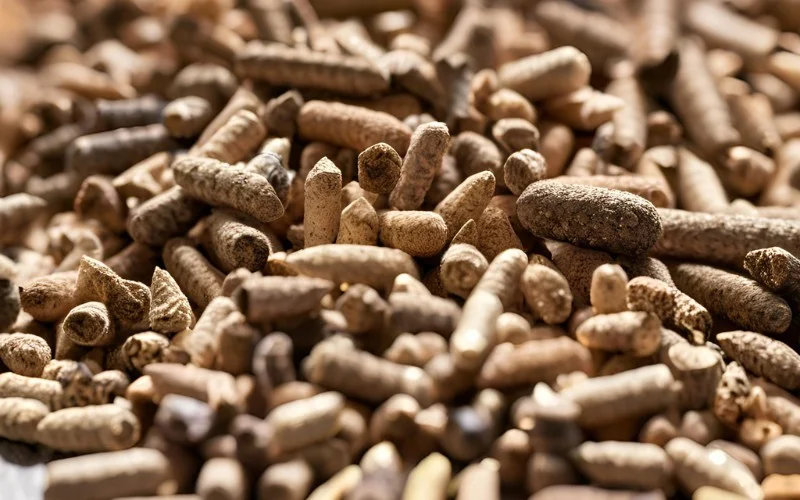
The Great American Pellets were delivered at the back of the driveway (as ordered) and had only a few bags with pellet leaks. A few of the bags had the top seal not sealed, and a bit of pellet ran out before I patched them with my trusty tape gun. The bags for these pellets were the thickest I have ever seen.
The bags must be six mils thick plastic – very few puncture holes but, as mentioned, a few “blowouts” where the thermal seal didn’t take. Pellet loss was confined to the level that the pellet bag was on, so there was no substantial loss. They sat through a few rainstorms before I brought them in, and the outer wrapping was very good against the rain, as are most pellets delivered these days.

These Great American Pellets are being burned in a Quadra-Fire “top drop” stove, which runs at low – medium speed. Opening the bag of these pellets provides no odor. The pellets are dark, like chocolate brown. Also, there must have been a sale on lignite as these pellets are shiny and brittle, and the bags contain several long pellets.
If your stove has problems with long pellets, try a bag or two before committing to a multi-ton order. However, there were almost no fines (sawdust) in virtually all the bags I have burned so far.
The excess lignite must bind these pellets tighter than a drum so no crumbling of pellets produces the sawdust. Dark pellet coloration is usually a warning sign for me that the pellets will burn “dirty,” and I was NOT
disappointed (although I wish I were).
Table of Contents
The bag states
- Grade: Premium
- Material: Wood
- Ash: Less than 1%
- Fines: Less than 0.5%
- Sodium: Less than 300 ppm.
Most other premium pellets have around 0.60% ash (or less). 0.60% qualifies as under 1%, but so does 0.99%. As you may have anticipated, I would say these pellets are “dirty.” The glass on my stove, which usually stays clear for two or three days of burning, is now clouded with ash after only one day.
In the past, with other premium pellets, I could usually go a week before cleaning the stove—3 or 4 days is the limit before the vacuum makes an appearance. On the other hand, they were under $230 per ton, and there were no clinkers. I will have to put up with more frequent cleanings for this heating season.
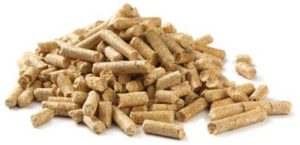 On the positive side, these Great American Pellets seem to burn reasonably hot. I am satisfied with the heat they give off. Nothing is printed on the bag, but they are rated at 8,000 BTUs. The other positive thing is that, as mentioned, there are virtually no clinkers.
The firepot bottom is free of these annoying solidified pieces, which can interfere with the stove’s performance and indicate that the wood probably had nails when processed. These pellets are free of this.
Review of Great American Pellets
These prices were very reasonable, so I picked up three tons on a tax-free weekend in Massachusetts in August 2012. The ad for them said that they are premium-grade pellets made from hardwood.
As you can tell by the many varied responses by other users of these and other so-called Great American Pellets, pellet quality can vary greatly from batch to batch—even from bag to bag, unfortunately. I had read a few favorable reviews on these pellets, saying they were clean-burning.
I took a chance and bought a cheap-priced pellet (from a new company). Although it stated they were premium quality – the batch I got burned dirty. If I had opened the bag and found golden-colored pellets – I would have hit the jackpot – low price and a clean pellet. Not this time.
Conclusion
Would I buy them again? I would have to say that I would be lukewarm. If I knew that a better pellet was being sold at $10 or $20 more per ton, I would probably pay more money to get a better-rated pellet and spend less on vacuum cleaner electricity. How would I rate these pellets? I rate them two and a half to three out of five stars, mostly for price and no clinkers.
Read more about Inferno Pellets – Review.
[…] are pellets that should burn well in just about any stove. This rating basically indicates the best pellets available on the market, with no significant […]